Author: ontheroa

  • Road Travel in Mexico: How We Prepare—and What Would You Add?

    Road Travel in Mexico: How We Prepare—and What Would You Add?

    By Bill Bell

    There is a point before a trip to Mexico when the conversation changes from “We should go” to “What do we need to get done?”

    That is where I want to begin. Dorothy, my wife and navigator, and I have spent decades travelling Mexico, but experience doesn’t mean we have finished learning. Someone reading this will have a useful habit, a recent experience or a suggestion we haven’t considered.

    So let’s compare notes. How do you get ready?

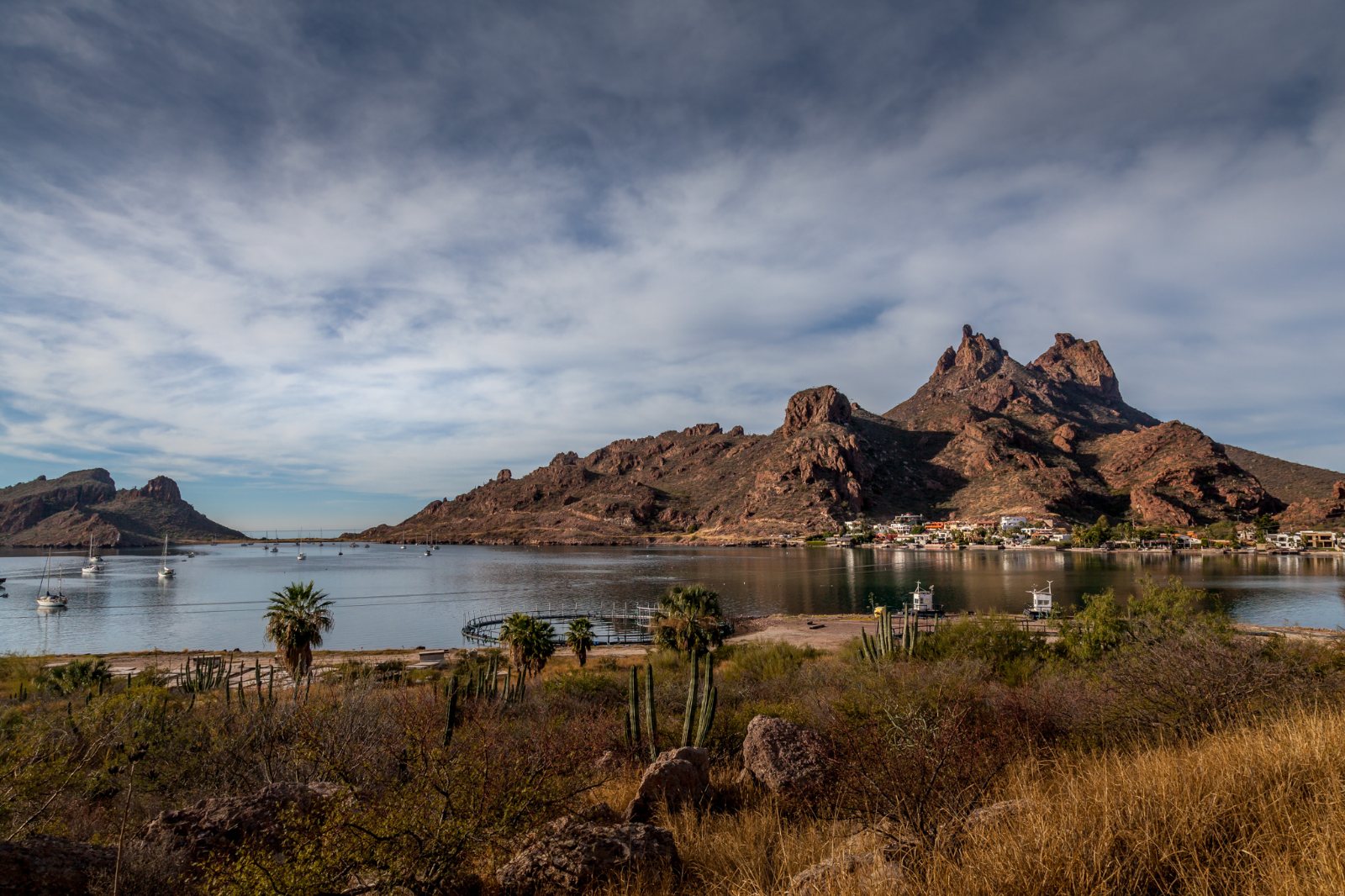
    We would start with our route and where we wanted to spend that first night. For us, crossing at Nogales meant planning a long first day’s drive to San Carlos. We wanted a reward at the end of it: warm sea breezes, dinner at our favourite restaurant and a real dose of Mexico.

    Having something to look forward to was part of the preparation. We weren’t simply putting kilometres behind us. We were heading somewhere we wanted to be.

    Some travellers choose to make the longer drive to Navojoa on their first day. For Dorothy and me, San Carlos was the stop we looked forward to. Either way, we would plan an early start and allow generously for documentation, border lineups and delays. Our aim would always be to arrive in daylight, with another stopping option if the crossing took longer than expected.

    What is your approach? A longer first day with a favourite stop waiting at the end, or a short drive after the border so you can settle in?

    Before leaving, we would want the vehicle checked: tires and spare, brakes, fluids, lights and battery.

    Tires deserve particular attention. We have had a few blowouts because of road conditions, so making sure our tires were in good condition was vital. Check the age of your tires, not just the tread. We would have their age and condition assessed before heading south, including the spare.

    We would check which tools our particular vehicle might need, make sure they were on board and keep them accessible once everything was packed. That includes the correct equipment for the spare tire and any locking wheel nuts. If something needed attention, home would be the place to deal with it.

    Our vehicle preparation list

    • Have tire age, condition and pressure checked—including the spare.
    • Check whether an oil change or other scheduled service is due.
    • Have brakes, fluids, lights, wipers and battery checked.
    • Check the jack, wheel tools and any locking-wheel-nut key for the vehicle.
    • Pack suitable tools and supplies where they can be reached.
    • Allow time to deal with any faults before departure.

    What have you had checked that saved trouble later? What spare or tool has earned its place in your vehicle? Tell us whether you travel by car, van or RV—the answers won’t be the same for everyone.

    Then there is the paperwork—and checking what may have changed.

    We would confirm the current operating hours for our chosen border crossing and the immigration and vehicle-permit offices we needed to use. We wouldn’t assume that every office kept the same hours, or that last trip’s arrangements still applied.

    We would also check the current rules for a Temporary Import Permit, usually called a TIP: whether our route required one, whether we and our vehicle qualified, and what documents we needed.

    If this is your first trip, or you have changed vehicles, make that check early. Being registered and road-legal in Canada or the United States does not by itself settle eligibility for temporary importation into Mexico.

    A salvage, rebuilt or otherwise branded title deserves specific attention. Check the exact wording with Banjercito before travelling. Owners of larger pickups, vans and RVs should also confirm the applicable vehicle classification and weight or load-capacity rules. Don’t wait until the border to discover a problem with your particular vehicle.

    Our On the Road in Mexico planning information is a starting point. Confirm current requirements with the relevant authorities before departure.

    We would arrange our Mexican vehicle insurance online before leaving. Doing it at home gives us time to enter the vehicle details carefully, check the dates, review the coverage and ask questions. We would rather sort that out with the documents in front of us than add another task to a busy border morning.

    Start with our updated Mexican auto insurance guide and compare coverage options for your trip. Review the policy’s liability limit, coverage, deductibles, exclusions and assistance arrangements before deciding. Make sure the policy is issued and the coverage starts when you need it.

    Once the insurance was arranged, we would save the policy and its claims and assistance numbers somewhere easy to find. I would want our passports, vehicle documents, insurance and permit paperwork organized before reaching the border.

    Our documents and medical preparation list

    • Check passports and current entry requirements for everyone travelling.
    • Confirm border-crossing and relevant immigration and permit-office operating hours.
    • Gather vehicle registration, ownership documents and any required permissions.
    • Check TIP requirements and eligibility for the travellers, vehicle and route.
    • Arrange Mexican vehicle insurance and save the policy and claims contacts.
    • Review travel medical coverage and any questions about existing conditions with the provider.
    • Plan regular medications and bring the relevant prescription information.
    • Keep accessible paper and digital copies of important documents and emergency contacts.

    How do you keep yours? A binder, a simple folder, copies on your phone? What did you wish you had ready the last time you crossed?

    Our phones belong on the preparation list too.

    We would program important numbers before leaving: insurance and assistance contacts, places we planned to stay, family and anyone we might need to reach along the way. I would keep a separate copy in case the phone was lost, flat or unavailable.

    And we would sort out how our phones were going to work in Mexico. Are we keeping our Canadian or U.S. service with a plan that includes Mexico, or switching to a Mexican SIM or eSIM?

    Those are different arrangements. We would ask about calls, data, charges and limits on extended use in Mexico. If changing SIMs, we would check compatibility and how we would receive calls or verification messages sent to our usual number.

    What has worked for you? Tell us which arrangement you used, how long you travelled and whether there were surprises. What works for a short holiday may not suit several months on the road.

    There is also a difference between knowing a route and knowing what has happened on it recently. We would want to hear from people who had just travelled the roads we were considering.

    Was there construction? Had an overnight stop changed? Was a campground still operating as expected? Did a crossing take longer than anticipated?

    A useful report tells us where, when and what you actually experienced. We would use those reports alongside current official information to help make our decisions. Our On the Road in México Facebook community is a place to exchange those experiences and ask questions.

    Packing deserves its own conversation. Water, something to eat, glasses, chargers, regular medications and our overnight bag would need to be within reach. Unloading half the vehicle to find one small bag is not much of an arrival plan.

    We would also have maps available without a connection.

    What have you forgotten once and never forgotten again? What have you finally learned to leave at home?

    Then there is the home we are leaving behind—mail, bills, plants and someone to contact if something needs attention. It is easier to enjoy the road when those loose ends have been dealt with.

    Our leaving-home list

    • Arrange bills and check that scheduled payments will be covered.
    • Check credit-card expiry dates, overseas use and any travel-notification requirements with the issuer.
    • Arrange mail collection or a hold.
    • Arrange care for plants and any pets staying home.
    • Choose a trusted home contact and agree how to reach each other.
    • Leave necessary keys, emergency contacts and household instructions with that person.
    • Check any home-insurance requirements for an extended absence.

    For me, the cameras belong on the list too: batteries, memory cards, chargers and a way to back up the photographs. I want to be ready when something catches my eye.

    That is what preparation makes room for: a market we haven’t visited, a meal worth lingering over, the people we meet and the places we want to photograph.

    An orange sunset over the water and silhouetted coastline at San Carlos
    Sunset in San Carlos—a first evening worth looking forward to. Photograph by Bill Bell.

    For Dorothy and me, San Carlos gave that first day a purpose beyond the drive. Getting there comfortably started with the work we did before leaving—and listening to other travellers.

    What would you add—and why?

    Send your tips to jaltembasol@gmail.com, or leave them in the comments on our published Facebook post. Share what you do to prepare and the experience that taught you to do it. Tell us whether you travel by car, van or RV. For recent road or border information, include where and when you travelled.

    We will bring your contributions together with our experience and checked reference information to produce a comprehensive trip-preparation guide, posted here for all road travellers to use.

    First trip or fiftieth, you have something to contribute. Questions are welcome too—they help us see what the guide needs to answer.

    Dorothy and I have our starting list. What would you add—and why?

    We may receive a referral commission when you purchase through our insurance link, at no additional cost to you.

  • Mexico News Briefs: Trade Talks, Lake Chapala Advisory, Border Roads and More

    Mexico News Briefs — September 13, 2026

    A quick look at five stories worth following this week, with links to the original reports and official sources.

    Mexico and U.S. Push for Trade Deal Before November Elections

    Mexico and the United States are accelerating talks aimed at reaching a bilateral trade agreement before the U.S. midterm elections on November 3. Reuters reports that officials on both sides see advantages in reaching a deal quickly, including possible relief from U.S. tariffs and clearer rules around automotive content and Chinese investment in Mexico.

    The talks could have major implications for cross-border commerce, manufacturing and the auto industry, all of which are closely tied to the flow of goods through Mexico’s northern border crossings. Read the original Reuters report.

    Canada Removes Lake Chapala and Mazamitla Regional Warning

    The Government of Canada updated its Mexico travel advisory on September 11 and removed the regional warning that had applied to Mazamitla and the area around Lake Chapala. Canada continues to advise travellers to exercise a high degree of caution in Mexico overall, and avoid-non-essential-travel advisories remain in effect for a number of regions.

    For Canadians driving south for the winter, particularly those heading to Lake Chapala and Ajijic, it is a useful change to note. Travellers should still check the latest government advisory before departure because regional guidance can change quickly. Read the current Government of Canada advisory.

    Nuevo Laredo Completes Long-Delayed MEX II Corridor

    Nuevo Laredo has completed the MEX II Corridor and vehicular bridge project, a major piece of road infrastructure that had remained unfinished for more than 25 years. The bypass connects industrial areas with the World Trade Bridge and carries heavy commercial traffic, with more than 16,000 trucks using the corridor each day.

    Although the project is aimed largely at freight movement, any improvement that separates or moves commercial traffic more efficiently can also matter to travellers using the Nuevo Laredo border region. Read the original Laredo Morning Times report.

    Ángeles Verdes Assist More Than 125,000 Summer Travellers

    Mexico’s Ángeles Verdes provided 42,977 services and assisted 125,095 travellers during the summer vacation period from June 29 through August 30, according to Mexico’s Tourism Secretariat. Mechanical assistance accounted for nearly two-thirds of all calls, with tire, engine, cooling-system and electrical problems among the most common issues.

    For anyone driving through Mexico, it is another reminder of how valuable the Green Angels remain. Assistance is available on major routes, and travellers can request help through the 078 line and the Ángeles Verdes mobile app. Read the official Secretaría de Turismo report.

    Nearly 10,000 Visitors Already at Two New Yucatán Archaeology Museums

    Two archaeological museums opened in Yucatán in July have already welcomed almost 10,000 visitors. INAH reports that the Museo de Sitio Ichkaantijoo, at Dzibilchaltún, received 8,321 visitors through September 6, while the Museo Arqueológico del Puuc at Kabah received 1,676.

    The Puuc museum is the first dedicated specifically to the history and archaeology of the Puuc region, which includes Uxmal, Kabah, Sayil, Labná and Xlapak. For road travellers exploring Yucatán, both museums add worthwhile stops to an already remarkable archaeological route. Read the original INAH bulletin.

    Drive Mexico Magazine will continue to follow border, highway, travel-advisory and tourism developments affecting people travelling Mexico by road.

  • Long Drive South: Practical Advice for Driving Mexico

    Long Drive South: Practical Advice for Driving Mexico

    Long Drive South: Practical Advice for Driving Mexico

    After decades of logging miles across Mexico—publishing road reports, running On the Road in Mexico, and advising thousands of travelers on vehicle permits and Mexican auto insurance—one question lands in my inbox more than any other: “Is it actually safe to drive?”

    I enjoy the drive south, but experience is no substitute for checking the route ahead. We could not verify the winter-driver and vehicle-permit totals previously quoted here, so those estimates have been removed.

    What the numbers can—and cannot—tell us

    The U.S. State Department’s reporting on non-natural deaths abroad concerns U.S. citizens, not a defined sample of tourists driving Mexican highways. It lists dates, places and causes of death. Those records alone do not give us a tourist driving risk rate.

    Dividing deaths by visitor arrivals and comparing the result with a full-year U.S. resident homicide rate mixes different populations and time at risk. It does not establish that a road traveller is “ten times safer” in Mexico. We also could not substantiate the earlier border-city percentage or the claimed toll-road casualty rate.

    Vehicle theft: do not assume your rig is exempt

    Canada’s Mexico advisory names camper vans, SUVs and pickups as carjacking targets. It does not provide separate figures for motorhomes, fifth-wheels or travel trailers. We have not verified a specific motorhome or fifth-wheel carjacking report in this review, and the advisory should not be read as evidence that all RV types are commonly targeted. The absence of a verified report also does not establish zero risk. Read the current Canadian safety advice.

    The previous comparison table mixed U.S. city incident totals with unsupported descriptions of Mexican highway risk. It did not use matching years, definitions or exposure measures, so it has been removed.

    Check the whole route

    Check current state and regional advisories before choosing each day’s drive. As reviewed September 18, 2026, Canada advises avoiding non-essential travel in Sinaloa, with specified destination exceptions that require arrival by air or sea. Those exceptions do not authorize a drive through the state on Highway 15D. Read the regional warnings and exceptions.

    Road conditions and security conditions are separate questions. An open highway is not an assurance of safe travel. Our current road reports provide dated updates; check again before departure.

    Practical habits for the drive

    • Plan daylight driving. Choose an overnight stop early enough to allow for delays.
    • Use toll routes where appropriate. They do not remove security risks or override regional warnings. Check conditions on your chosen road.
    • Arrange insurance before departure. Confirm Mexican liability coverage, deductibles, assistance and claims procedures with your insurer. Our insurance guide explains the options.
    • If threatened, do not resist. People matter more than the vehicle or its contents.

    These precautions reflect Canada’s Mexico travel advice. They reduce avoidable exposure; they cannot promise a trouble-free trip.

    Mexico has given us decades of memorable road journeys. My advice is to prepare carefully, leave room to change plans and judge the next stretch on current information.

    Correction, September 18, 2026: Unverified travel totals, numerical risk comparisons and vehicle-targeting assurances have been removed. This article is practical guidance, not a statistical estimate of your personal risk.

  • More Than a Shopping Trip: Mexico’s Living Markets

    More Than a Shopping Trip: Mexico’s Living Markets

    Photography by Bill Bell

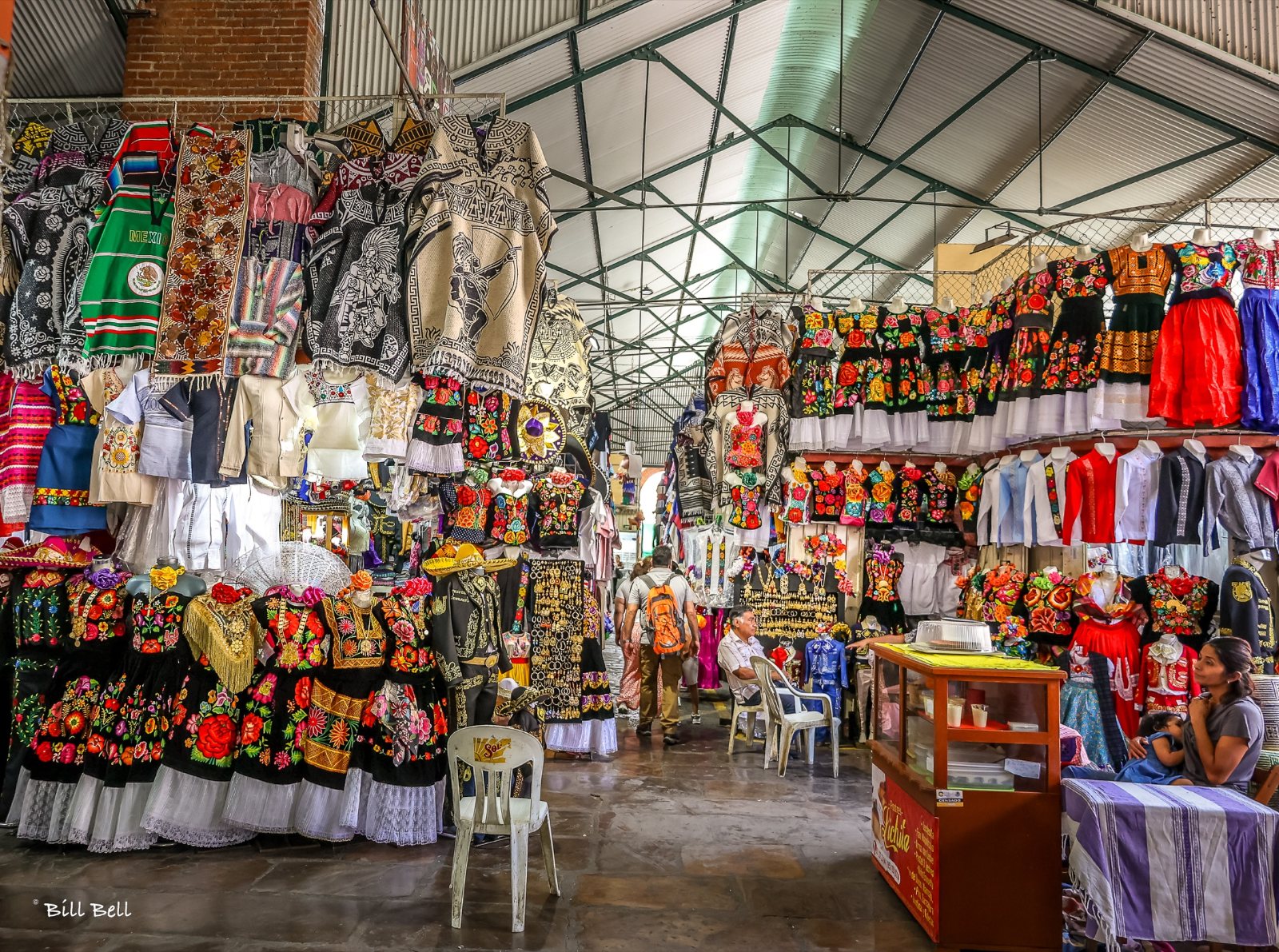
    Market interior

    Shopping in a Mexican market is a life experience filled with colour, conversation, aromas and surprises. You may arrive looking for tomatoes and leave with a bag of fruit you hadn’t planned to buy, advice on how to prepare it, and an appetite that has completely rearranged your afternoon.

    Across our travels through Mexico, markets have been places where we stop, look and linger. Through my camera, I find myself drawn as much to the people as to the goods: a vendor arranging a display, a customer choosing carefully, an exchange across a counter. The purchase is only one part of what is happening.

    Vendor at work

    There is plenty to catch the eye. Embroidered clothing hangs in bright rows. Sacks of dried ingredients crowd a stall. Deep red hibiscus flowers promise a refreshing glass of agua de jamaica. Handwritten signs offer clues, although sometimes the best way to understand what you are looking at is simply to ask.

    For a photographer, the challenge is deciding where to point the camera. For a shopper, it is remembering what you came for.

    These are working places. Behind the displays are long hours, physical effort and the daily business of making a living. What makes a wonderful photograph for a visitor is someone else’s workplace, their routine and their livelihood. That deserves respect, especially when photographing the people who give a market its character.

    Hibiscus flowers and handwritten signs

    From major mercados to city life

    Some of Mexico’s best-known mercados show how varied the experience can be. In Mexico City, La Merced and Mercado de San Juan are familiar names for anyone interested in exploring the capital through its food. They offer another way to understand a city: through its ingredients, its counters and the everyday business of feeding people. Mexico City Tourism

    In Oaxaca, Mercado Benito Juárez is one of the city’s longstanding market landmarks. Its place in local life is a reminder that a market can become as much a part of a city’s identity as its churches and plazas. Oaxaca Tourism

    Dried goods and market staples

    Guadalajara’s Mercado Libertad, better known as San Juan de Dios, brings together handicrafts, clothing, shoes and food counters serving dishes such as birria and tortas ahogadas. It is the sort of place where a shopping list can quickly become a suggestion. You came for one thing; lunch and several other discoveries intervened. Guadalajara Tourism

    Small mercados, bigger conversations

    But a market doesn’t have to be famous to deserve your time. A small neighbourhood mercado can offer just as much reason to stop, talk and look closely. The well-known names may draw us in, but it is often an ordinary exchange across a counter that stays with us afterward.

    Embroidered textiles and clothing displays

    Convenience versus the market rhythm

    Over the years, I have also noticed the growing presence of shopping malls and large stores. Conversations with Mexicans have left me wondering whether shopping habits are shifting—and what that might mean for the markets we have enjoyed for so long.

    Those conversations are impressions gathered along the road, not a verdict on an entire country. Mexico is too varied for that. Markets remain vibrant in many of the places we visit. Still, I find myself hoping that convenience will leave room for the experience of shopping face to face.

    Food preparation at the counter

    I understand the appeal of finding everything under one roof, with predictable hours and an easy place to park. People have busy lives, and where they shop is a practical decision. Markets have to earn their customers’ business, just as other shops do.

    Yet there is something I would miss if shopping became only a matter of filling a cart and heading for the parking lot.

    In a market, you can ask questions. You can learn what is in season, watch something being prepared and discover an ingredient you cannot name. A familiar vendor may know what you like. A brief errand can become a conversation. Sometimes the most memorable thing you take away never goes into your shopping bag.

    Looking through my photographs, that is what I want to share: markets as we encountered them, and the small human moments that kept us coming back.

    I hope those experiences remain part of Mexico’s future. And whenever the opportunity comes along, I intend to keep walking through the market—with a camera, a little curiosity and enough room in the day for an unexpected lunch.

    Facebook caption: Market day in Mexico still feels like the real heart of a journey—people, stories, food, and the small moments you can’t buy in a mall. From colorful stalls to quick conversations that become mini adventures, this one is for everyone who wants to see how much more shopping can be when it’s face-to-face.

  • Driving from Canada to Mexico? Start with These Three Decisions

    Driving from Canada to Mexico? Start with These Three Decisions

    By Bill Bell

    A drive from Canada to Mexico becomes easier to plan when you stop treating it as one enormous trip. There is the journey out of Canada, the U.S. transit, and the Mexican route that takes you to the place you actually want to be.

    Dorothy and I have spent decades travelling Mexico by car and RV. My advice is to settle a few practical decisions before getting lost in the details. We have put that approach into a new, short Driving to Mexico from Canada guide on On the Road in Mexico.

    1. Decide what the U.S. leg is for

    Is it part of your holiday, or simply the country you need to cross? If current U.S. politics make you uncomfortable spending money there, plan for necessary fuel, meals and overnight stops and leave optional shopping and sightseeing out. Keep enough flexibility to rest. Saving a hotel night is no bargain if it means driving tired.

    2. Get the border folder organized

    People, vehicles and insurance each have their own requirements. Put your passports, registration and supporting documents together. Work out whether your complete Mexican route requires a Temporary Import Permit, and arrange Mexico-valid vehicle insurance before crossing.

    See our updated Mexican auto insurance guide and compare coverage options before you leave home.

    We may receive a commission if you purchase through our insurance links, at no additional cost to you.

    The new guide has a short checklist with boxes you can tick, plus links to our existing documents, immigration, TIP and insurance guides. Confirm the current requirements for your citizenship, residency and vehicle before departure.

    3. Plan the first Mexican overnight stop

    Work backwards from your destination. Compare the road beyond each crossing, not just the distance to the border. Allow time for paperwork and aim for a first overnight stop you can reach comfortably in daylight.

    I also like a backup stop earlier along the route. Weather, a border queue or road construction can change the day. A workable plan has room for that.

    Short pages you can use on the road

    The new section separates the overview, U.S. transit, border checklist, and routes and overnight stops. It uses my road-trip photographs and keeps detailed reference material a click away.

    Open Driving to Mexico from Canada →

    Get the essentials organized, leave a little breathing room, and save some energy to enjoy Mexico when you arrive.

  • Better Travel Information: Four Mexico Websites Working Together

    Better Travel Information: Four Mexico Websites Working Together

    By Bill Bell, Publisher | Dorothy Bell, Editor

    Bill and Dorothy Bell travelling together
    Bill and Dorothy Bell, publisher and editor of our Mexico travel websites.

    A good Mexico trip starts long before the first border crossing. It starts with questions: Which route makes sense? What paperwork will I need? Where should we stop, and what would we regret driving past?

    Dorothy and I have spent more than 35 years travelling Mexico and sharing what we learn. We are now improving four of our principal websites to make that experience—and the knowledge of our contributors—more useful to our readers.

    Practical help for the journey

    On the Road in Mexico is the practical starting point for people travelling by car or RV. Border crossings, vehicle permits, Mexican automobile insurance, routes and driving advice remain at the heart of its coverage. Work on clearer organization and updated material is intended to help readers find the answers they need.

    Here at Drive Mexico Magazine, we bring together road reports, destination features and stories about the places and people along the way. Our weekly road updates are part of that service, alongside ideas for exploring beyond the highway.

    More to discover beyond the road

    Mexico Archeology is getting a fresh design and better organization of our photographs and archaeological-site coverage. We are drawing on places we have visited while expanding information about important sites still on our travel list. Mexico’s history deserves time and attention, not just a quick stop for a photograph.

    Sol Mexico News now has a cleaner, news-oriented homepage with a changing featured article, recent reporting by Tara A. Spears, and a section devoted to Nayarit and Jaltemba Bay. New stories assigned to those sections can appear automatically on the front page.

    The four sites have different jobs, but a common purpose. As I put it:

    “These websites have always been about helping people. Dorothy and I have travelled throughout Mexico for more than 35 years, and we want to share what we have learned while also providing a place for knowledgeable contributors and community voices. The new designs should make that information easier to find, easier to read and more useful to everyone.”

    Dorothy Bell serves as editor across our network, helping shape and review the information we publish.

    A conversation that continues on Facebook

    Our websites work alongside three Mexican Facebook communities: On the Road in Mexico, Friends of Riviera Nayarit and Travel Buddies—On the Road in Mexico. They bring together people planning their first visit, experienced road travellers and residents willing to share local knowledge.

    The groups are places to ask questions, exchange experiences and flag developments. The websites give longer explanations, photographs and useful resources a more lasting home. A helpful answer should not be lost simply because yesterday’s conversation has slipped down the feed.

    “Facebook is very good for immediate questions and conversations, but valuable information can be difficult to locate a week or a month later. Our websites preserve that information and allow us to explain important subjects properly. Together, the websites and Facebook groups provide a much better overall service to our readership.”

    These improvements are continuing. We will keep reviewing older material, adding new reports and connecting readers with the appropriate resource across our network. Before making a trip, readers should still check time-sensitive requirements and conditions with the responsible authorities.

    Our aim is straightforward: help people prepare well, travel responsibly and enjoy more of Mexico.

  • Picking the Right Mexico Border Crossing for Your Drive

    Reviewed September 2026: There are more than two dozen official land crossings between the U.S. and Mexico, and picking the wrong one for your route can turn a quick trip into a long wait. Below, every major crossing is grouped by region so you can find yours, then click through to On the Road in Mexico’s crossing-specific guide for route notes. Hours, lanes and restrictions shift often, so always confirm the current status before you travel.

    Check wait times before you commit to a route.

    Look up official U.S. Customs and Border Protection wait times and hours first. A port showing “open” for passenger vehicles doesn’t mean the immigration office or vehicle-permit window you also need is open.

    California to Baja California

    Arizona to Sonora

    New Mexico to Chihuahua

    Texas to Chihuahua, Coahuila and Tamaulipas

    Five things to confirm before you pick a crossing

    1. Lane hours aren’t uniform. Passenger, pedestrian, commercial, Ready and SENTRI lanes can run on entirely different schedules — check the specific lane you’ll use.
    2. Immigration is a separate stop. Your entry document doesn’t come from the same office as the vehicle lane, and that office may keep its own hours.
    3. Vehicle permits need their own confirmation. If you need a Temporary Import Permit, go through an authorized Banjercito channel and confirm where it can be issued and later cancelled.
    4. Insurance isn’t optional. U.S. and Canadian policies generally do not satisfy Mexico’s liability requirements, so arrange Mexican liability coverage before you cross.
    5. Match the crossing to your rig. A crossing that’s simple in a sedan can be a real headache in a motorhome or towing a trailer — plan accordingly.
    A note on accuracy: We’re working through each individual crossing guide to replace outdated fixed-hour claims with current official sources and clear review dates. Until a specific guide shows a recent review date, confirm every operational detail yourself before relying on it.
  • More than 3,000 baby sea turtles released in Mexico

    More than 3,000 baby sea turtles were released into the Gulf of Mexico from a beach in northern Veracruz after months of nighttime patrols to rescue and protect nests threatened by human activity and other risks, conservationists said. 

    Fundación Yépez released between 3,200 and 3,500 hatchlings Sunday at El Raudal, in the municipality of Nautla, after relocating eggs from nests considered at risk and protecting them until they hatched.Video released by the organization showed hundreds of tiny turtles moving across the sand toward the water as conservation workers and residents watched.

    The release marked the culmination of months of overnight patrols along the Veracruz coast to locate nests and move eggs from vulnerable areas. Fundación Yépez has worked to protect sea turtles in the region for 59 years.

    “They were moved as eggs, nests in risk areas that today are being returned to the ocean as turtles,” a representative of the organization said in the video.

    Conservationists said protecting the nests has sometimes brought them into conflict with tourists who approach nesting turtles or interfere with protected areas.

    The organization described months of sleepless nights and beach patrols, including disputes with visitors, before the hatchlings could finally be released.

    The concerns intensified in August after an adult female green sea turtle was found dead on a beach in Nautla with her eggs still inside.

    Ricardo Yépez, a representative of Fundación Yépez, said at the time that inappropriate human interaction could have contributed to the turtle’s death and urged visitors not to disturb animals arriving on the beach to nest according to reports by La Jornada. The cause of death was not officially established.

    Yépez has also reported instances of visitors approaching nesting turtles for photographs and even climbing onto their shells, behavior he said can prevent the animals from completing the nesting process.

    Veracruz is an important nesting and migration area for sea turtles in the Gulf of Mexico. Five of the world’s seven sea turtle species use the state’s coastline to nest, feed or migrate, according to the Veracruz Center for Sea Turtle Research and Conservation.

    The center oversees 9.6 miles of coastline in Nautla and neighboring Vega de Alatorre, where green and Kemp’s ridley sea turtles are particularly important. Vega de Alatorre averages about 10,000 nests annually and could represent the largest nesting area in Veracruz and possibly the entire Gulf of Mexico, state environmental authorities said.

    Elsewhere in northern Veracruz, conservation efforts have produced thousands more hatchlings this summer.

    The National Commission of Natural Protected Areas said workers and 14 community technicians released 2,505 green, Kemp’s ridley and hawksbill sea turtle hatchlings during the annual Sea Turtle Festival at the Playas del Totonacapan Sanctuary from July 31 through Aug. 2. About 3,855 people attended conservation activities during the three-day event.

    The federal agency released another 1,207 Kemp’s ridleyIn 2025, conservation workers recorded 6,148 nests in the Nautla-VegadeAlatorre area and released more than 54,000 hatchlings from protected incubation enclosures, according to Veracruz environmental authorities.

    BEFORE YOU CROSS

    Arrange Mexican auto insurance

    Compare coverage before your trip and keep your policy documents with you.

    Compare insurance options

    We may receive a commission if you purchase through this link, at no additional cost to you.

  • Mexico’s Exports to Canada Surge 20.2% Amid US Trade Feud

    ← Back to Mexico Road News

    Sol Mexico News · September 1, 2026

    Mexican merchandise exports to Canada surged 20.2% during the first half of 2026, as trade tensions reshape North American purchasing patterns.

    Data from Banco de México indicates that while the United States remains the dominant supplier to the Canadian market, its growth trajectory has nearly stalled. According to figures from the US Census Bureau, US exports to Canada edged up by 1.9%, rising from US$172.617 billion to US$175.826 billion over the first half of the year.

    Although US sales to Canada remain more than 14 times larger than Mexico’s total trade volume with the nation, Mexican exports grew at a pace more than ten times faster than those of its North American neighbor during the same six-month window.

    Trade Frictions Alter North American Flows

    The divergence in export growth follows more than a year of diplomatic and commercial friction between Washington and Ottawa, triggered by the return of US President Donald Trump to the White House.

    The two trade partners under the Agreement between the United States of America, the United States of Mexico, and Canada (USMCA) responded differently to US trade policies. Mexico chose a strategy of direct negotiation, successfully avoiding immediate retaliatory tariffs.

    In contrast, Canada instituted retaliatory duties of 25% on a wide range of US goods in March 2025, targeting steel, aluminum, tools, computers, servers, and monitors, while explicitly excluding Mexican-origin merchandise.

    Initial shifts in Canadian procurement emerged throughout 2025, when Canadian imports of US goods declined by 3%, representing a contraction of CA$14.6 billion.

    Concurrently, Canadian purchases from Mexico grew by 19.6%.

    The State of Trade 2026 report, published by the Office of the Chief Economist at Global Affairs Canada, highlights that the pullback in US imports was driven by a combination of Washington’s tariff policies, Ottawa’s countermeasures, and operational challenges within the automotive sector.

    During the same period, total Canadian imports of goods and services from third-party nations grew by 11.2%.

    The report identified cargo vehicles, passenger automobiles, and data processing units as the primary product lines propelling Mexico’s market share gains.

    Escalation and Breakdown of Bilateral Talks

    Bilateral trade disputes widened under Canadian Prime Minister Mark Carney.

    In July 2026, the Trump administration announced plans to implement 50 percent tariffs on Canadian products, accusing Ottawa of maintaining discriminatory trade practices against US automotive vehicles, alcoholic beverages, and dairy products.

    Efforts to negotiate a resolution ended on Aug.21, 2026, when Prime Minister Carney suspended formal negotiations.

    Ottawa cited last-minute modifications made by US negotiators to the proposed terms, which Carney characterized as unfair, economically unviable, and harmful to the long-term predictability of cross-border agreements.

    “The United States changed,” Carney declared when announcing the suspension, adding that Canada would not return to the economic relationship it had maintained for decades with its primary trade partner and promising a “dollar-for-dollar” response.

    Canada’s next phase of retaliatory tariffs is scheduled to take effect on Sep.

    8, 2026. These measures will impose duty rates of 15%, 25%, and 50% across CA$27.6 billion worth of US imports. Target categories include steel, aluminum, dairy, home appliances, agricultural machinery, paper, electronics, furniture, and apparel, while US motor vehicles will remain subject to pre-existing tariff measures.

    Industry analysts note that these tariffs create a pricing advantage for Mexican manufacturers whose exports enter Canada without facing comparative duties.

    Long-Term Growth Trajectory and Sector Breakdown

    The recent acceleration in Mexican exports reflects an established upward trend that predates the recent tariff disputes, having been interrupted only by the broader economic contraction caused by the COVID-19 pandemic in 2020.

    Mexican shipments to Canada totaled US$14.080 billion in 2018 and US$14.316 billion in 2019, before contracting by 22.2% to US$11.139 billion in 2020, the lowest point in the period analyzed.

    Recovery accelerated in subsequent years, with exports rising to US$13.060 billion in 2021, US$15.586 billion in 2022, and surpassing US$18.000 billion in 2023. Sales reached US$18.906 billion in 2024 and hit a record high of US$22.1688 billion in 2025, representing a 17.3% year-over-year increase.

    Between 2018 and 2025, total Mexican exports to Canada expanded by 57.5%, averaging an annual growth rate of approximately 6.7%.

    Data for the first half of 2026 shows that expansion was heavily concentrated in the auto transport sector.

    Shipments under the vehicles, tractors, and auto parts classification reached US$6.9828 billion during the six-month period, up 41.9% year-over-year.

    Category / Product Group

    H1 2026 Exports (US)

    YoY Change (%)

    Vehicles, Tractors & Auto Parts

    US$6.9828 billion

    +41.9%

    Electrical Machinery & Equipment

    US$1.0340 billion

    +16.3%

    Precious Metals & Stones

    US$434.0 million

    +37.9%

    Furniture

    US$312.0 million

    +13.6%

    Plastics & Plastic Articles

    US$109.0 million

    +44.5%

    Mechanical Machinery & Boilers

    Not disclosed

    -31.9%

    Pharmaceutical Products

    Not disclosed

    -53.9%

    Optical & Medical Instruments

    Not disclosed

    -70.4%

    Edible Fruits & Nuts

    Not disclosed

    -13.2%

    The US$2.060 billion absolute growth in automotive sector exports was slightly higher than the overall US$2.058 billion net increase in total Mexican exports to Canada. This discrepancy is accounted for by declines in other product lines, which were offset by the automotive sector’s expansion. Automotive products currently represent 57% of all Mexican goods exported to Canada, up from 48.3% a year prior.

    Long-term data shows automotive exports to Canada expanded from US$6.120 billion in 2018 to US$11.327 billion in 2025, representing a cumulative increase of 85%.

    Other export chapters recorded notable growth during the first half of 2026, albeit from lower baseline totals.

    Exports of electrical machinery, apparatus, and materials rose 16.3% to US$1.034 billion.

    Precious stones and metals increased by 37.9% to US$434 million, furniture exports rose 13.6% to US$312 million, and plastics and related manufactures grew 44.5% to US$109 million.

    Conversely, several sectors experienced contractions over the same period.

    Sales of mechanical machinery, boilers, and appliances declined 31.9%, subtracting US$546 million from the export baseline.

    Pharmaceutical product sales fell by 53.9%, optical and medical instruments dropped 70.4%, and fruit exports registered a 13.2% decrease.

    Automotive Pressures and Regional Performance Context

    Despite gains in the Canadian market, Mexican automotive manufacturers face headwinds due to US trade policies.

    The United States enforces a 25% tariff on imported vehicles.

    For units compliant with USMCA rules of origin, the tariff applies specifically to the non-US content incorporated into the vehicle.

    These duties have placed measurable pressure on Mexican manufacturing volume.

    Between January and July 2026, the value of Mexican automotive exports to the United States decreased by 1.8%. Over the same seven-month frame, total light vehicle exports from Mexico to all global destinations fell 0.3% to 1.95 million units.

    The contraction deepened significantly in July, when light vehicle exports dropped 9.7% year-over-year, according to data from the INEGI.

    During the seven-month period from January to July 2026, Canada received 247,069 Mexican-built light vehicles, accounting for 12.7% of Mexico’s total automotive exports.

    The United States absorbed 75.9% of the total.

    While the Canadian market remains smaller in absolute volume compared to the US, its growth provides an alternative destination for Mexican manufacturers amid shifting demand.

    From a broader regional perspective, the Organization for Economic Co-operation and Development (OECD) reported that trade growth across North America exceeded the average performance of the Group of Twenty (G20) economies during the second quarter of 2026.

    OECD data shows global merchandise trade among G20 nations accelerated in the second quarter, with overall import growth rising to 6.7%, up from 5.2% in the previous quarter.

    Mexico reported positive trade performance across both flows, with second-quarter exports increasing by 12.2% and imports growing by 7.7%.

    In the United States, second-quarter merchandise import growth accelerated to 7.8%, up from 6.0% in the prior quarter, driven primarily by increased purchases of computer systems and accessories.

    However, US export growth slowed to 3.9%, despite higher energy prices boosting crude and petroleum shipments.

    Canadian export growth reached 13.5% over the quarter, supported by shipments of energy products and motor vehicles, while import growth slowed.

    In contrast, OECD data noted a slowdown in Chinese trade growth during the second quarter of 2026 following sharp increases in the first quarter, with export growth moderating to 4.7% and imports rising 8.9%, focused on mechanical, electrical, and high-tech components.

    Japanese trade also slowed, while South Korean imports rose 11.6% on energy and semiconductor equipment purchases, alongside 19.3% export growth.

    While cross-border disputes continue to restructure trade routes, tariffs placed on US goods have increasingly positioned Mexican producers as alternative suppliers for Canadian importers seeking to mitigate rising import costs.

    Before you cross

    Arrange Mexican auto insurance

    Compare coverage before your trip and keep your policy documents with you.

    Compare insurance options

  • Mexico may pay a steep price for the killing of Jalisco cartel leader El Mencho

    This is the most significant intervention against the cartels since the capture of former drug lord Joaquín “El Chapo” Guzmán in 2016. The CJNG is one of the strongest criminal organisations in Mexico and, alongside the Sinaloa cartel, sits at the centre of US claims about fentanyl production and trafficking.

    The killing of Oseguera Cervantes, who is better known as “El Mencho”, may have enabled Mexico’s authorities to secure a political win with Washington. But the operation should not be seen as a victory. What often comes next when the Mexican state removes a high-profile cartel figure like El Mencho is an extended period of violence and instability inside the country.

    In my own research on criminal conflict in the Tierra Caliente region of western Mexico, I trace how earlier rounds of arrests and state killings have reshaped local criminal groups, broken alliances and created openings for new players and leaders. It was through this very cycle of state enforcement and cartel reorganisation that El Mencho rose to prominence.

    El Mencho began as an operational figure linked to the Valencia cartel, an organisation based in the state of Michoacán. The group lost ground in the late 2000s following sustained pressure from the authorities. After key parts of the Valencia network were dismantled around 2010, El Mencho and other remnants of the group moved to Jalisco further north and founded the CJNG.

    The conditions that allowed the CJNG to rise came from the same enforcement repertoire that the authorities have now deployed against it. This pattern matters because it undercuts a common assumption among policymakers, including in US agencies such as the Drug Enforcement Administration, that removing a “boss” equals dismantling a criminal market.

    The removal of Mexican criminal leaders does not cause the market for drugs to vanish, nor does it cause trafficking routes to disappear. What changes is the balance of power among groups that already compete for territory, labour and access to ports, roads and local authorities.

    Plumes of smoke rising from Puerto Vallarta on Mexico's Pacific coast.
    Plumes of smoke rising from Puerto Vallarta on Mexico’s Pacific coast as violence erupts following the killing of Nemesio Oseguera Cervantes on February 22. EPA / STR

    Studies that track the so-called “kingpin” strategy, the deliberate targeting of cartel leaders by law enforcement, have found that detentions and killings often trigger short-term spikes in homicides and instability in Mexico. Some work suggests that violence rises for months after a leader’s removal, while other research shows that the killing of a kingpin can provoke a sharper increase than an arrest.

    This happens because an affected cartel faces a sudden succession struggle and employs violence to prevent – or respond to – rivals testing the new leadership and trying to renegotiate areas of control. As criminal groups cannot use the formal court system to resolve disputes, they tend to do so through open violence or bargains enforced by coercion.

    This logic of violence has already been seen following El Mencho’s death. Reports of cartel gunmen blocking roads, launching arson attacks and carrying out disruptions across multiple states fit a familiar script: an affected organisation signalling its capacity, punishing the state and warning local rivals not to seize the moment.

    Even if the state contains this wave of violence, the deeper risk sits in what follows. A leadership vacuum invites internal fracture and external opportunism from rivals who have waited for an opening to test boundaries and settle scores.

    The 2024 detention of Sinaloa cartel leader Ismael “El Mayo” Zambada, for instance, has provoked a wave of violence in Sinaloa state as different factions in the organisation battle for leadership.

    US drug politics

    Another cycle that keeps repeating across Latin America is that US drug politics shapes security agendas throughout the region. A surge in overdose deaths, for example, can lead to political panic in the US and the application of pressure on Latin American governments to take action, usually through militarised enforcement.

    These governments respond with crackdowns, raids and high-profile captures. This is followed by rising violence as criminal organisations fragment and then, after a period of time, governments try to deescalate. The cycle starts again when concern over drug trafficking next arises in the US.

    Drug prohibition keeps this cycle alive by ruling out any response other than force or criminal law, while failing to produce meaningful results. Most countries have criminalised drugs. But despite governments reporting rising drug seizures each year, deaths linked to drug use globally continue to climb.

    Mexico’s security forces cannot end a transnational market that is financed largely by US demand, no matter how many high-profile arrests they make. Operations that result in the killing or detention of cartel figures instead redirect and reorganise the drug trade, while often intensifying violence.

    If Mexico and the US want fewer cartel-related deaths, they need to stop treating kingpin killings as the main metric of success. While a high-profile strike temporarily satisfies US pressure, it is Mexican citizens who all-to-often have to live with the blowback of this approach.