Author: ontheroa

  • Riviera Nayarit This Week: Coastal Swells, Tourism and Community News | September 28–October 3, 2026

    Riviera Nayarit This Week: Coastal Swells, Tourism and Community News | September 28–October 3, 2026

    Weekly local news briefing | September 28–October 3, 2026

    Heavy surf brought the coast into sharp focus this week, with beach restrictions around Bahía de Banderas and erosion affecting San Pancho’s waterfront. Meanwhile, a major tourism investment report, questions about a floating advertising screen and preparations for Día de Muertos offered plenty for residents and visitors to follow.

    Here is our selection of local and regional reports, with links to the original coverage. Weather and closure information is dated: this roundup is not a live beach or navigation bulletin.

    Rachel brings rough seas and beach restrictions

    Meridiano reported on October 1 that beaches in the Bahía de Banderas area remained under red-flag restrictions as authorities monitored the effects of Hurricane Rachel. The warning concerned dangerous surf even as the storm moved farther offshore.

    For anyone heading to the beach or planning a boat trip, check the flags, lifeguard instructions and the relevant harbour authority’s latest advice before setting out. Restrictions can change from one beach or port to another.

    Read the October 1 report: Meridiano Vallarta

    San Pancho’s waterfront takes a battering

    In San Francisco, better known as San Pancho, strong wave action removed sand and exposed foundations beneath parts of the beachfront restaurant area, according to Reporte Diario on October 2. Its coverage identified affected structures around La Perla, Olivas and Punta Paraíso.

    The damage illustrates why a receding storm does not mean an immediate return to normal along the waterfront. Assessments and any repairs need to follow local safety guidance.

    Read the original report: Reporte Diario

    Nayarit tops the planned tourism investment portfolio

    Nayarit led the federal tourism investment portfolio with US$9.281 billion across 25 projects, Tribuna de la Bahía reported on September 30. That is about one-fifth of the national portfolio, with much of the activity concentrated along the Riviera Nayarit corridor.

    These figures describe registered, planned investment, rather than money already spent or projects already completed. The portfolio includes hotel, residential and mixed-use development, alongside other tourism segments.

    Read the figures and explanation: Tribuna de la Bahía

    Floating billboard raises questions about the bay’s skyline

    The large floating advertising screen operating in Bahía de Banderas continued to draw objections. NoticiasPV Nayarit reported on October 2 that a Puerto Vallarta councillor had requested information from the Nuevo Vallarta harbour authority about the platform’s permissions, inspections and safety arrangements.

    The operator says it has navigation permissions. The dispute concerns what those permissions cover and how advertising on the water should be regulated; the report does not establish a final ruling that the operation is unlawful.

    Read the latest on the permit questions: NoticiasPV Nayarit

    Road patching begins in Valle Dorado

    Bahía de Banderas began a new stage of road patching in Valle Dorado, with approximately seven blocks included in the initial work, according to Meridiano’s October 2 report. For residents dealing with damaged road surfaces, the useful measure will be which streets are completed and how well the repairs hold up.

    Read the road repair report: Meridiano Vallarta

    Día de Muertos plans bring culture and surf together

    The International Día de Muertos Festival in Bahía de Banderas is scheduled for October 29–November 2, with Sayulita as the principal venue and activities also planned for Bucerías, San Pancho, San Juan de Abajo and Valle de Banderas.

    The announced programme includes altars, catrina contests, parades, music, food and community events. A surfing tournament in Sayulita is scheduled for October 29–November 1. It is an early date to put in the diary, with individual event details worth checking closer to the festival.

    Read the festival announcement: Red Financiera

    Regional politics: Santana backs Bugarín’s appointment

    Jasmine Bugarín’s appointment as coordinator of the Defence of Transformation and National Sovereignty in Nayarit was a major regional political story. La Crónica reported on September 28 that Héctor Santana publicly accepted the decision and called for strengthening the movement.

    The appointment is part of the political preparations for 2027. It should not be confused with the result of a public election.

    Read the original political report: La Crónica


    Across Mexico: This week’s national news and culture highlights.

  • Mexico This Week: News and Culture | September 28–October 3, 2026

    Mexico This Week: News and Culture | September 28–October 3, 2026

    September 28–October 3, 2026

    Mexico closes the week with serious questions about school safety, commemorations of a painful chapter in its history, and weather concerns along the Pacific coast. Alongside those headlines, there are stories worth celebrating: music returning to a much-loved concert hall, Indigenous dance crossing continents, and artisans sharing the living traditions of the Mexican Caribbean.

    Here is our selection of news and culture from the week’s coverage. Each item links to a freely accessible article so you can read further without a paid subscription. The linked reports are in Spanish.

    School attack prompts proposals to prevent violence

    The federal government announced plans to strengthen efforts against school violence following a deadly attack in Torreón. Its proposed response includes obligations for digital platforms to identify, report and remove content directly encouraging violence, alongside work with university specialists.

    The announcement also raises questions about how those measures would operate without restricting legitimate expression. President Claudia Sheinbaum said the approach should avoid censorship.

    Read the report — Aristegui Noticias, October 2.

    Mexico remembers October 2, 1968

    Thousands marched in Mexico City to commemorate the Tlatelolco massacre, keeping alive demands for remembrance and accountability. The anniversary remains an important moment in Mexico’s public life, connecting the student movement of 1968 with contemporary concerns about rights and state power.

    This year’s march also brought reports of vandalism by some participants and allegations of excessive police force. Authorities said Internal Affairs would investigate officers’ conduct.

    Read the report — Aristegui Noticias, October 2.

    Rachel weakens, but Pacific weather remains a concern

    Hurricane Rachel had weakened to Category 1 and was moving away from Mexico in the October 3 morning report. Nevertheless, the national weather service continued to warn of rain in southern Baja California Sur and elevated surf along parts of the Pacific coast, including Sinaloa, Nayarit, Jalisco and Colima.

    Elsewhere, a cold front and other weather systems were expected to bring heavy rain to several regions. This is a dated weekly update; anyone travelling should check the latest local forecasts before setting out.

    Read the October 3 update — La Jornada.

    A celebrated concert hall welcomes music back

    One of Mexico City’s great musical spaces has reopened after 180 days of rehabilitation. In coverage published September 28, La Jornada described the return of audiences to UNAM’s Sala Nezahualcóyotl for a concert featuring the university’s Philharmonic Orchestra and the world premiere of Gabriela Ortiz’s Fanfarria volcánica.

    The work improved accessibility, lighting and the stage while preserving the hall’s distinctive architecture and renowned acoustics. For music lovers, the reopening restores a place where the setting is an essential part of the experience.

    Read the story — La Jornada.

    Indigenous Australian stories arrive on Mexico’s stages

    Bangarra Dance Theatre’s first visit to Mexico brings Aboriginal and Torres Strait Islander histories to audiences through contemporary dance. Following September performances in Mexico City, the company’s Guanajuato appearances were scheduled for October 3 and 4 as part of the Festival Internacional Cervantino.

    Artistic director Frances Rings describes a practice rooted in relationships with communities and elders. The performances offer Mexican audiences an encounter with stories of cultural survival, memory and healing told through movement.

    Read the feature — La Jornada.

    Quintana Roo brings Maya language, food and folklórico to Los Pinos

    More than 160 participants from Quintana Roo are bringing the Mexican Caribbean’s cultural traditions to Los Pinos in Mexico City for an October 3–4 gathering. The programme includes Maya language and poetry, embroidery, crafts, regional cooking, music and folklórico.

    The event also offers an opportunity to support artisans and producers directly. Beyond the familiar beach images of Quintana Roo, it presents the people, skills and traditions that help define the state.

    Read the programme highlights — Mexican Times.

    A free exhibition opens a window into the artist’s workshop

    Eduardo Robledo’s Muerte, amor y otros demonios brings together 30 works at Mexico City’s Centro Nacional de las Artes, with free admission through October 18. Prints, sketches, sculptures and printing matrices allow visitors to follow the creative process as well as enjoy the finished pieces.

    The exhibition draws on Mexican popular culture, ideas surrounding death, and the environment of Xochimilco. It is an appealing stop for anyone interested in how an image develops from an artist’s materials and decisions.

    Read about the exhibition — Mexican Times.

  • Guadalajara’s Cabañas: The Murals That Make You Stop and Look

    Guadalajara’s Cabañas: The Murals That Make You Stop and Look

    By Bill Bell · Photography by Bill Bell

    Leer este ensayo fotográfico en español

    A visit to Guadalajara is not complete without spending some time at the Cabañas. And I do mean spending time. This is a place that deserves more than a quick walk through, a photograph and a check mark on the sightseeing list.

    There is something extraordinary about standing beneath José Clemente Orozco’s murals. Your eyes move from one figure to another, following a hand, a face, a sweep of colour. Then you look higher, into the dome, and find yourself caught up in something much larger than you expected.

    Mexico has given Dorothy and me so many reasons to keep exploring. Its history and the ways its artists confront that history are among the most compelling. At the Cabañas, you can feel how closely the two are connected.

    The building itself has a story worth knowing. The former Hospicio Cabañas was established to shelter people in need, including children and the elderly. Its courtyards and orderly architecture speak of that original purpose. Today, the complex is a UNESCO World Heritage Site, recognised for both its architecture and the remarkable paintings within it. Read UNESCO’s account of the Hospicio Cabañas.

    Then you enter the chapel, and the mood changes.

    Orozco painted its 57 frescoes between 1937 and 1939. Born in Jalisco, he became one of the great figures of Mexican muralism. Here, he used the walls and vaults to explore conquest, religion, machinery, oppression and the contradictions of humanity. It is an enormous undertaking, in both scale and ambition. Museum history · Orozco’s murals.

    You do not need to arrive with a degree in art history to feel their force.

    A group of sombre figures in an Orozco fresco at the Cabañas
    Faces and gestures carry the emotional weight of Orozco’s paintings. Photography by Bill Bell.

    Look at the faces. Some seem burdened, others hardened. Groups of figures press together. A hand grips a cross. A ship pitches into a sweeping sea. The bodies and gestures carry a tension that reaches you before you have worked out the symbolism.

    A sailing ship beside a curling sea in an Orozco mural
    A ship and a sweeping sea: movement painted into the curve of the architecture. Photography by Bill Bell.

    To my eye, there is very little reassurance in these scenes. They ask difficult questions about power, belief and what people do to one another. You may admire the painting and feel uncomfortable at the same time. That is part of what makes the visit so memorable.

    A painted figure beside a large cross and crown in an Orozco mural
    Symbols of belief and power invite a closer look. Photography by Bill Bell.

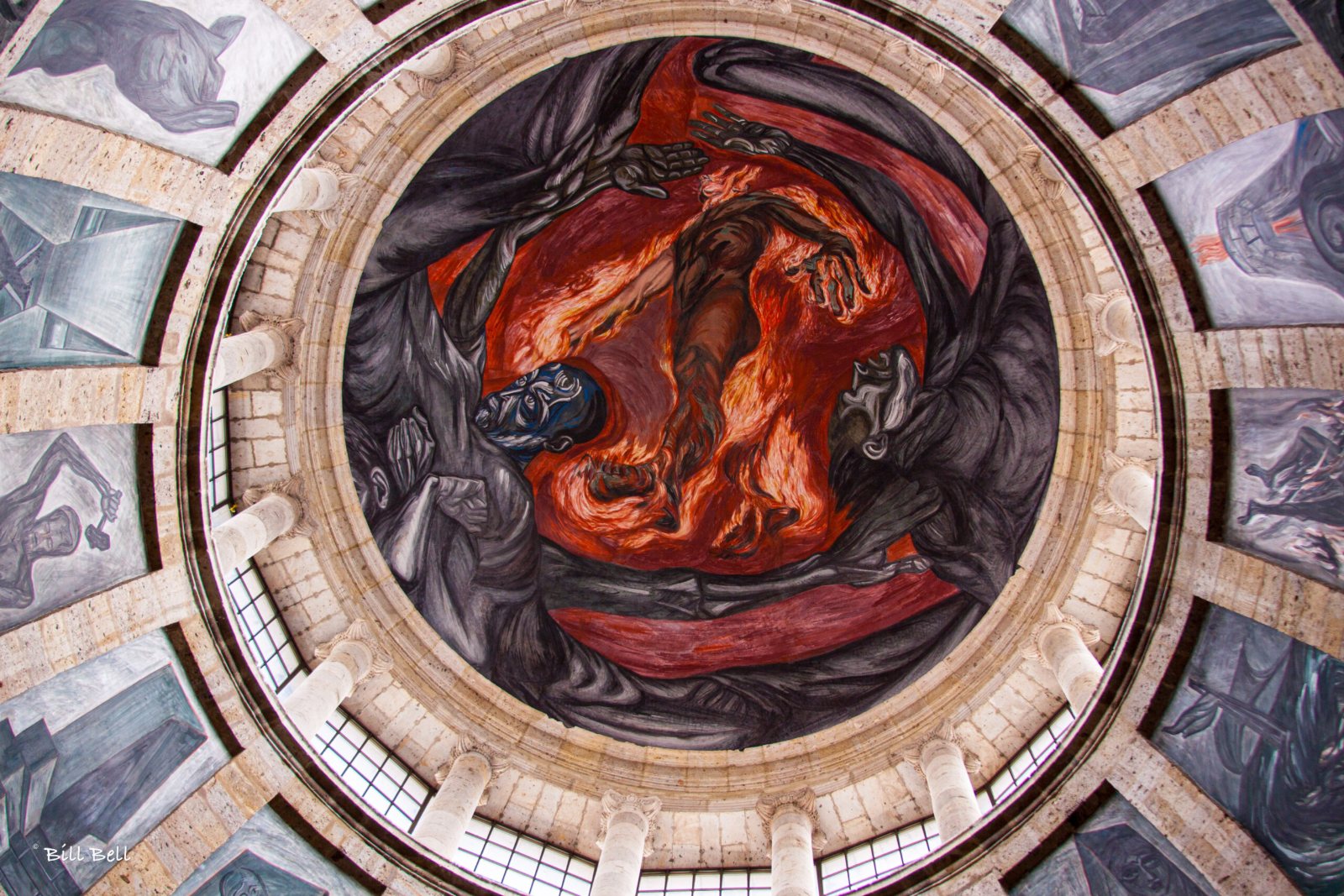
    And above it all is El Hombre de Fuego—The Man of Fire.

    The figure stretches through a blaze of orange and red, surrounded by darker bodies that follow the curve of the dome. It is difficult to find a resting place for your eyes. Everything seems to turn, reach or pull you farther into the painting.

    Whether you see suffering, transformation or some struggle between the two, the image stays with you. I would hesitate to reduce it to a tidy explanation. Part of its power is that you can keep looking and still have questions.

    For a photographer, the challenge is deciding how much to include.

    A wide photograph shows how the painting belongs to the building: the circle of stone, the windows, the figures gathered around the dome. Move closer with the lens and the experience changes. A face or a hand becomes the centre of attention. The great sweep of the mural gives way to a small, deeply human detail.

    A figure holding a hammer above sculpted faces in an Orozco fresco
    A quieter detail beneath the dome rewards patient looking. Photography by Bill Bell.

    These photographs move between those views. They show the scale, but also the expressions and gestures that make you want to look again.

    Still, a photograph can only take you so far. It cannot quite give you the sensation of standing below all that painted space, turning slowly and discovering that there is something demanding your attention in every direction.

    That is why I would give the Cabañas an unhurried part of a day. Spend time beneath the dome. Look at the surrounding paintings. Step into a courtyard and let your eyes rest, then return for another look.

    Close detail of flames and figures in El Hombre de Fuego
    Returning to the fire: a closer view of the dome’s restless colour and movement. Photography by Bill Bell.

    There is plenty in Guadalajara to keep a visitor happily occupied. But the Cabañas offers something that goes beyond an enjoyable afternoon. It leaves you thinking about Mexico, about its history, and about the extraordinary ability of an artist to make that history feel urgent and personal.

    Go for the murals. Give yourself time to feel them. You may find they accompany you long after you have left Guadalajara.


    More through Bill’s camera: Mexico in Motion: Our Love of Folklórico and We Always Stayed Longer at the Ruins.

    Planning your journey to Guadalajara? Visit our Mexico trip-planning guides and Mexico vehicle insurance information before you set out.

  • Mexico in Motion: Our Love of Folklórico

    Mexico in Motion: Our Love of Folklórico

    Words and photographs by Bill Bell, with a closing reflection from Dorothy Bell

    Everywhere we go in Mexico, folklórico seems to find us. Guadalajara, Mexico City, beachside communities—somewhere the music starts, the skirts begin to move, and there I am with the camera again.

    Dorothy and I have watched countless performances over the years. You might think we would eventually have enough photographs of swirling dresses. Apparently not.

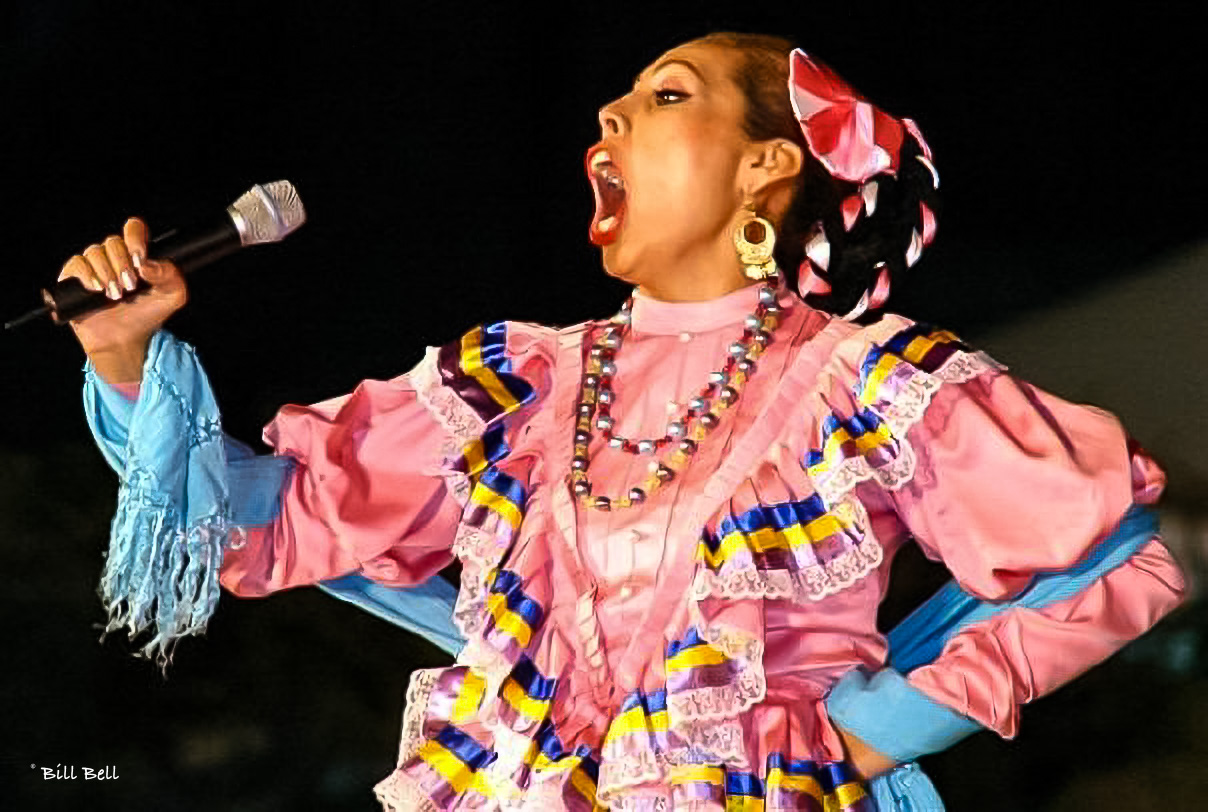
    Folklórico loves the camera. A skirt opens into a great fan of colour, ribbons trace the movement, and a dancer’s expression changes just as you press the shutter. The challenge is deciding where to look. Follow the dress and you might miss the smile. Watch the feet and you miss the exchange between partners.

    And those exchanges are part of the pleasure. There is humour, pride and flirtation—a glance, an approach, a turn away. Even without knowing the story behind a particular dance, you find yourself drawn into the conversation.

    A smiling folklórico dancer in a pink dress
    The smile matters as much as the movement — Photography by Bill Bell.

    The dresses are another reason to keep watching. Their styles, colours and details help express the different regional traditions represented in the performances. I would not pretend to identify every costume correctly, but I appreciate how much variety there is within what we casually call Mexican dance.

    Folklórico dancers in green and golden dresses
    Colour, ribbons and the sweep of a skirt give each photograph its own rhythm — Photography by Bill Bell.

    Some of our enjoyment has come from watching polished stage performances. Just as memorable are the dancers we encounter in smaller communities, where the performance feels close enough to be part of the gathering.

    For Dorothy and me, these are among the experiences that have kept Mexico interesting through all our years of travelling here. There is always another performance worth stopping for, another expression worth trying to catch.

    Folklórico dancers performing together in blue and green dresses
    Dancing together: the shared enjoyment behind the spectacle — Photography by Bill Bell.

    Then folklórico became part of our own family.

    Our granddaughter Shanti lives in both Canada and Mexico, and while in Mexico she has been learning folklórico dance. Her grandmother Dorothy spent many long hours sewing her a dress.

    I photograph the finished result. Dorothy knows rather more about the work that goes into making all that fabric move.

    I love this photograph of the two of them. After all the movement in the other pictures, here is a quiet moment: a grandmother, a granddaughter and a dress made with care.

    For Shanti, learning the dance is one way of taking part in the Mexican side of her life. For us, it has made something we have enjoyed watching for years a little more personal.

    Dorothy has her own memories of that dress, and hers are the right words to finish with:

    Dorothy and Shanti beside a fountain, Shanti wearing the folklórico skirt Dorothy sewed
    Shanti with her grandmother Dorothy, who spent many hours sewing her folklórico skirt — Photography by Bill Bell.

    “Of all the projects I have sewn, the folkloric skirt was my favourite. Ever.

    “Every seam, every ribbon was attached with care and love. I thought about Shanti and her future. Thought about all the rehearsals and performances. I thought about her and the love we have for this extraordinary artist. It was a gift of love. Total love.

    “And I was somewhat sad to have it finished and wrapped up to present to her. I was enjoying the process of making something so beautiful for someone very special to us.”

    — Dorothy Bell


    More of Mexico through Bill’s camera: Ballet Folklórico in Guadalajara and We Always Stayed Longer at the Ruins.

    Planning your own journey? Start with On the Road in Mexico and our Mexico trip-planning pages.

  • We Always Stayed Longer at the Ruins

    We Always Stayed Longer at the Ruins

    Palenque, Uxmal and Teotihuacán
    Story and photography by Bill Bell, with recollections from Dorothy Bell

    Dorothy and I could spend an inordinate amount of time exploring Mexico’s archaeological sites. And we did.

    We have always loved Mexico’s history, especially the opportunity to explore these extraordinary monuments to its Indigenous past. Palenque, Uxmal and Teotihuacán were three places where we were quite happy to lose track of time.

    We aren’t archaeologists. We are two curious travellers who wanted to look, learn and understand something of the lives behind the buildings. A quick walk through, a photograph and back on the road was never going to be enough for us.

    There was always something else to see. And, as Dorothy reminded me when she read this, another story to hear—or a family memory to add to the ones we already had.

    Palenque: monuments, stories and sounds

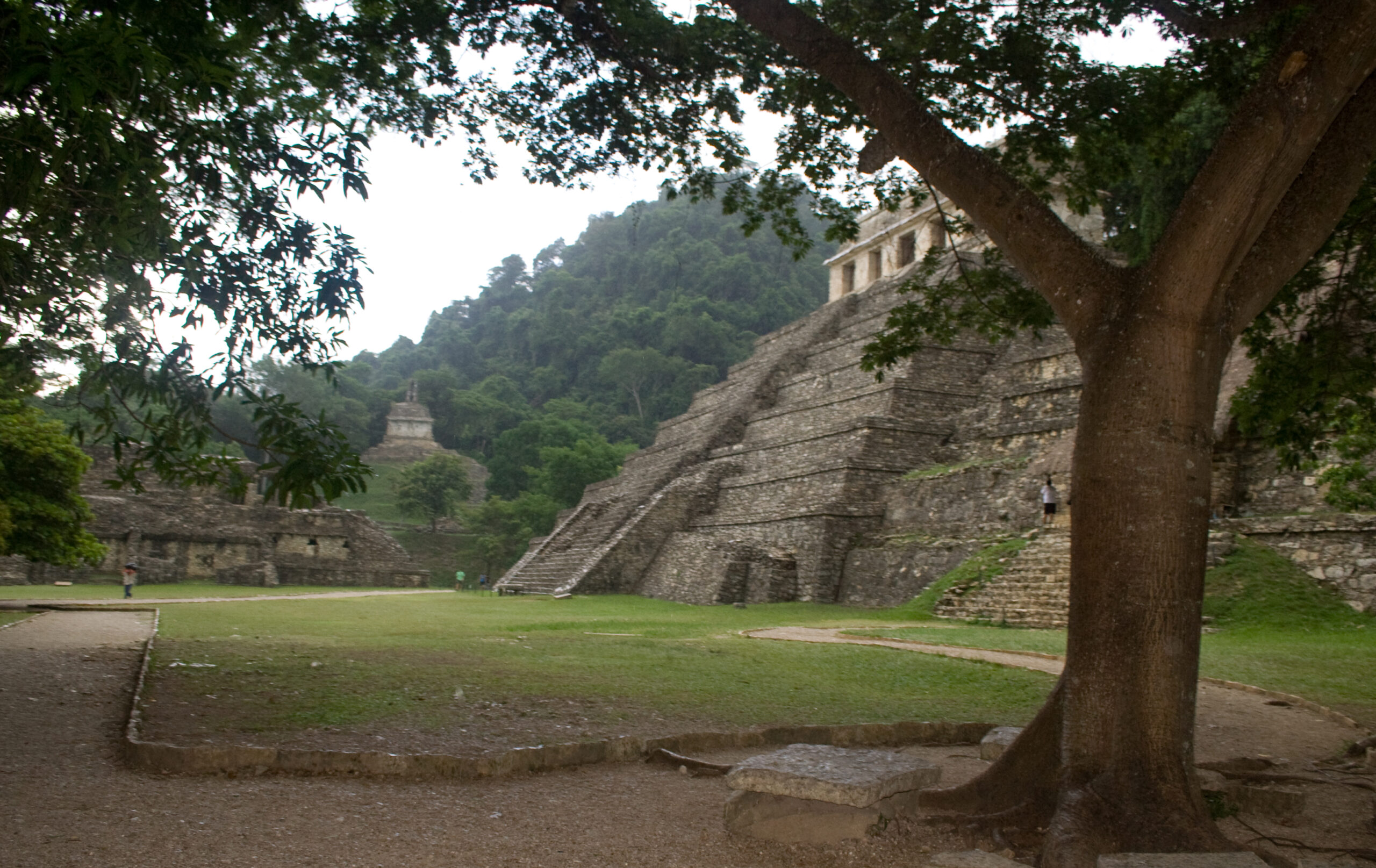
    At Palenque, the setting is part of the experience. The buildings and the surrounding jungle draw your attention in different directions. You look at what has been uncovered, then wonder what lies beyond it.

    It takes some imagination to see a living city where we now see an archaeological site. But that was part of what fascinated us. People worked here, made decisions, practised their beliefs and went about their lives.

    Then there were the stories. An ancient king. The Red Queen. The eccentric count associated with the site’s early exploration. The people who studied Palenque, wrote about it and fell in love with it, much as we did.

    We could spend hours looking at the buildings and listening to accounts of their history. Then a howler monkey would cry out deep in the jungle and change the whole atmosphere. Suddenly, you were very aware of where you were standing.

    Dorothy calls Palenque “our sweet city of monuments, stories and sounds.” That captures something a list of temples and dates never quite could.

    With a camera, there was another reason to slow down. A wide photograph gave you the setting. Moving closer brought out the stonework and workmanship. Both deserved time, and I was rarely in a hurry to put the camera away.

    Explore our Palenque guide on Drive Mexico.

    Uxmal: a place we loved to share

    Pyramid of the Magician at Uxmal
    Pyramid of the Magician at Uxmal — Photography by Bill Bell.

    Uxmal rewards a closer look.

    The decorated façades can hold your attention long after you have taken in the buildings themselves. Patterns, carved faces and repeated forms make you stop and examine what you might otherwise have walked past.

    I find that photography encourages this. You begin by looking for a picture and end up studying something.

    Dorothy and I could spend far longer than we intended there. Another detail to examine. Another angle to consider. Another question neither of us could answer.

    And then there were the legends. The dwarf magician said to have built the great pyramid in a single night. Stories that sent your imagination off in another direction. At the ball court, we wondered about the people who had played there and those who had watched.

    Stone architecture at Uxmal
    Stone architecture at Uxmal — Photography by Bill Bell.

    Alongside those old stories, our family collected a few of its own.

    On one visit, our son Adam decided he wasn’t climbing any farther. Getting him down became my job, with Adam on my back. It is the sort of thing that stays in the family memory long after you have forgotten what the guidebook said.

    We also remember introducing our cousin Maisie to Uxmal and sharing our fascination with the Maya. There is a particular pleasure in taking someone to a place you love and watching them discover it.

    For us, Uxmal became a place of family memories as well as ancient history. We loved sharing it.

    Explore Uxmal through our photographs and guide on On the Road in Mexico.

    Teotihuacán: trying to take it all in

    The pyramids and platforms of Teotihuacán
    The pyramids and platforms of Teotihuacán — Photography by Bill Bell.

    At Teotihuacán, it is the scale that first makes you pause.

    The long views along the Avenue of the Dead and the great pyramids give some sense of the ambition behind this city. Even then, a photograph struggles to convey the whole experience.

    Our visits brought together so many things: climbing where it was permitted at the time, exploring the museum, and walking down the Avenue of the Dead, imagining ourselves as a king or a soldier moving through a living city.

    At each monument there were more questions. How did people live? How was such a place organised? What did it take to build and sustain it?

    Those are large questions for a couple of visitors with a camera. We certainly didn’t leave with all the answers. But we enjoyed giving the questions some time.

    Carved stone detail at Teotihuacán
    Carved stone detail at Teotihuacán — Photography by Bill Bell.

    The museum and the smaller details helped bring our attention back from the enormous structures to the people who had lived among them. A carved face could hold my attention just as surely as a pyramid.

    Teotihuacán also reminded us how easily visitors can compress different peoples and centuries into one vague idea of “ancient Mexico.” The more we explored, the more we understood that each place deserved to be considered on its own terms.

    Read our guide to exploring Teotihuacán and the Avenue of the Dead.

    Time well spent

    Palenque, Uxmal and Teotihuacán are very different places. What they shared, for Dorothy and me, was the ability to hold our attention—and to bring us back.

    We learned to be careful with the word “ruins.” It describes the remains of buildings, but it can suggest that the people and their cultures simply vanished. Mexico’s Indigenous communities are part of the country’s present as well as its past. Their histories extend far beyond the monuments visitors come to photograph.

    Looking through my photographs now, I see reminders of how much there was to learn. Some pictures show the grand views. Others record a small detail that was enough to make me stop.

    They also bring back our family visits. The children. A cousin discovering somewhere special. Dorothy and me taking our time, talking about what we had seen and wondering about what we still didn’t understand.

    We loved that part of travelling in Mexico. We could follow our curiosity and stay a little longer.

    At the archaeological sites, “a little longer” often became quite a while.

    Neither of us considered it time wasted.

    Planning your own journey? Visit On the Road in Mexico and our Mexico trip-planning pages for help getting started.

  • Fresh Seafood and the Freedom of RV Travel in Mexico

    Scallops in Baja, oysters on the Nayarit coast, and a little shore fishing in Mazatlán: fresh seafood was one of the pleasures Dorothy and Bill Bell loved about RV life in Mexico.

    With favourite sauces from home and a kitchen travelling along with them, dinner became part of the journey. Bill shares the memories and his photographs in Fresh from the Sea: Why Dorothy and I Loved RV Life in Mexico.

    Read Bill’s full story on On the Road in Mexico.

  • Mazatlán in 60 Seconds: Beaches, Banda and Historic Downtown

    Mazatlán in 60 Seconds: Beaches, Banda and Historic Downtown

    Mazatlán is the kind of place that makes you put the camera down long enough to order lunch, then pick it straight back up again. Sandy beaches, a working waterfront, music drifting across the sand and a historic downtown with plenty of character: there is a lot here beyond the resort strip.

    Mazatlán in 60 seconds

    Take a quick trip through Bill Bell’s photographs, from the Pacific shoreline and the city’s familiar pulmonía taxis to the José María Pino Suárez Market. This reel uses music and on-screen text, so you can enjoy the story with or without sound.

    Mazatlán in 60 seconds · Photography by Bill Bell

    More than a beach town

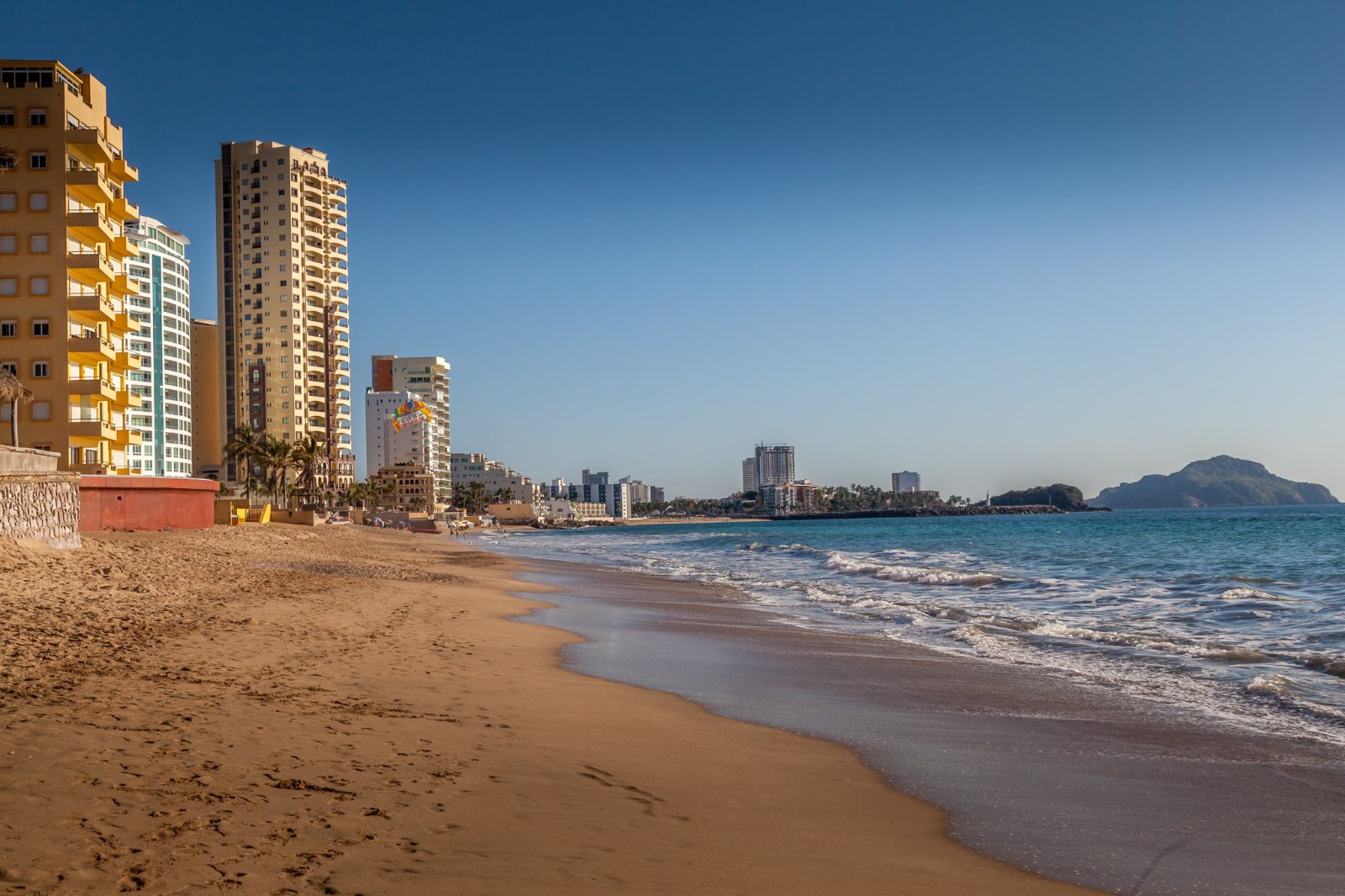
    Mazatlán’s name means “Place of the Deer.” Just south of the Tropic of Cancer, this Sinaloa port brings together beach holidays and the everyday life of a coastal city. Leave time for the historic centre, a seafood meal and a stroll along the waterfront.

    There is history behind the holiday atmosphere. Indigenous communities lived in the region before the Spanish arrived in the 1500s. German brewers founded Pacífico in 1900, and banda music is part of the sound of Sinaloa. The city’s Carnaval tradition adds another reason to return.

    Make it part of the journey

    Mazatlán makes a memorable stop on a west-coast Mexico road trip. Beaches and hotels are only part of the appeal; give yourself time to explore downtown and enjoy the food. If your journey continues across the water, check Baja Ferries for current routes and vehicle arrangements before planning your crossing.

    Drive Mexico – Extraordinary Road Travel
    Photography by Bill Bell.

    Music: “Mexico – Mexican Mariachi Music” by IKOLIKS, via Pixabay.

    Sandy beach and Pacific shoreline in Mazatlán, photographed by Bill Bell
    Mazatlán’s Pacific shoreline. Photography © Bill Bell.
  • Vehicle stolen in Mexico? What about your belongings?

    Vehicle stolen in Mexico? What about your belongings?

    By Bill Bell
    September 28, 2026

    You park your vehicle, lock it and head out for dinner. When you return, it is gone—with your luggage, laptop, camera and everything else you packed for Mexico.

    Would your insurance replace all of it? That question involves two different kinds of protection: insurance for the vehicle and insurance for your belongings. Before crossing the border, you need to know where one ends and the other begins.

    What covers the stolen vehicle?

    Mexpro offers policies with different levels of protection. Liability-only coverage does not insure your own vehicle against theft. To protect it, you need a policy that includes total theft coverage, such as the full-coverage options Mexpro describes.

    Premium policies can also include partial theft: theft of certain parts or accessories attached to the vehicle. That does not mean partial theft of your luggage or other possessions. Covered equipment and exclusions depend on the insurer and policy.

    A theft settlement is subject to the policy’s valuation rules, insured limit and deductible. The amount you enter when buying insurance is not automatically a guaranteed payout. Actual cash value generally means the vehicle’s current market value, rather than the cost of buying a brand-new replacement.

    What does “contents” mean?

    Think of the things you packed, rather than the vehicle itself: clothing, suitcases, phones, laptops, cameras and other personal belongings.

    Mexpro states that its tourist auto insurers do not cover personal property stolen from inside the vehicle. Its explanation also applies to belongings carried in an RV, travel trailer or towed unit.

    That distinction matters even when the entire vehicle disappears. Having total theft coverage for the vehicle does not turn everything inside it into insured vehicle equipment. Buying premium auto coverage does not automatically add contents protection.

    Permanently installed equipment is a separate question. For example, the Chubb/ABA wording available through Mexpro requires special equipment to be described and included in the vehicle’s value for the applicable protection. Ask about expensive additions before purchasing; bolting something down does not guarantee coverage.

    Can you buy protection for your belongings?

    Possibly—and you may already have some. Start with your homeowners, condo or renters/tenants insurer. Personal-property coverage can extend to belongings temporarily away from home. Canadian insurer TD, for example, explains that possessions stolen from a car may fall under home coverage, with limits applying while travelling. Confirm that your own policy covers Mexico and the length and circumstances of your stay.

    For expensive cameras, jewellery or other valuables, ask about scheduled personal-property coverage, sometimes called a floater or endorsement. Standard limits may be too low. Ask whether it covers theft from a vehicle in Mexico and, where relevant, equipment used for paid work. Additional valuables protection is available from some insurers, but eligibility and terms vary.

    Another possibility is travel insurance with baggage and personal-effects benefits. Read the vehicle-theft exclusions carefully. Allianz, for example, describes restrictions involving unattended vehicles, locked doors, belongings visible from outside and high-value items. A baggage benefit should not be assumed to cover every camera or laptop you bring.

    For RV travellers, describe your situation accurately, including extended stays or full-time living. Ask your insurer which personal-property protection, if any, applies to that use in Mexico. Do not buy a policy based only on the word “contents.”

    Ask this before you leave

    Give your insurer a realistic list of what you carry and ask:

    “If my locked vehicle is stolen in Mexico with these belongings inside, which policy pays for them? What are the total limit, per-item limits, deductible and exclusions?”

    Also ask whether settlement uses replacement cost or depreciated value. Request written confirmation of how coverage applies to your trip. Keep photographs, receipts and serial numbers somewhere accessible if the vehicle and your phone disappear together.

    If a theft happens

    Get somewhere safe, notify the police and call the claims number on your policy promptly. Mexpro stresses that claims must be reported while you are still in Mexico. Follow the insurer’s instructions before leaving. Notify the separate insurer covering your belongings as well, if applicable.

    When buying through our Mexpro link, check the vehicle’s theft protection—and arrange any needed belongings coverage separately. “Full coverage” is a package name, not a promise that everything you own is insured.

    Coverage depends on the insurer, purchased options and issued policy. This article explains the distinction between vehicle and personal-property insurance; it does not confirm coverage under an individual policy. We may receive a referral commission from insurance purchases through our link.

    Visit our Mexican auto insurance page to compare coverage and get a quote.

  • Mexico This Week: 10 Big Stories | September 21–27, 2026

    Mexico This Week: 10 Big Stories | September 21–27, 2026

    By Drive Mexico Magazine
    Week of September 21–27, 2026 · Published September 27

    A powerful Pacific hurricane, a central-bank decision and questions over a major fuel investigation led a busy week in Mexico. Here are ten developments worth catching up on, with concise summaries and direct links to the original reporting.

    1. Hurricane Polo puts the Pacific coast on alert

    Reported September 22–27, 2026

    Polo reached Category 5 strength during the week, prompting school suspensions in parts of the Pacific coast and warnings about heavy rain, dangerous surf and mudslides. By Sunday morning, the National Hurricane Center was tracking the hurricane southwest of Cabo San Lucas. Travellers should use current official advisories rather than earlier forecasts when deciding whether to move.

    Read the original report: Associated Press (English)

    Check the National Hurricane Center’s current Pacific outlook. Storm information above reflects the reporting available Sunday morning.

    2. Banxico holds its benchmark rate at 6.50%

    Reported September 24, 2026

    Mexico’s central bank voted unanimously to leave its benchmark interest rate unchanged at 6.50%. The decision came as annual inflation reached 3.42% in the first half of September. Banxico pointed to the inflation outlook, exchange-rate movements and differences between the Mexican and U.S. economic cycles in explaining its cautious stance.

    Read the original report: El País (Spanish)

    3. Mexico passes 130 million residents as births decline

    Reported September 22, 2026

    New INEGI intercensal findings put Mexico’s 2025 population at about 130.39 million. El País reported that the figure was below earlier projections and came alongside falling fertility. Veracruz, Guerrero and Mexico City lost population between 2020 and 2025—a reminder that national growth can conceal very different regional trends.

    Read the original report: El País (Spanish)

    4. Questions deepen over Guanajuato’s huge fuel operation

    Reported September 23, 2026

    What had been presented as a major strike against illegal fuel came under scrutiny. La Jornada reported, citing federal prosecution sources, that the 59 million litres at a Guanajuato storage facility might not constitute fuel smuggling, and that the FGR’s state delegate had been removed. The legal origin of the fuel remained a matter for investigation, rather than an established finding of wrongdoing.

    Read the original report: La Jornada (Spanish)

    5. Juchitán mayor’s arrest leads to a court hearing

    Reported September 26, 2026

    La Jornada reported that Miguel Sánchez Altamirano, described in its report as Juchitán’s former mayor, was ordered held in preventive detention following his September 23 arrest. The case concerns alleged aggravated extortion and offences against state security. The detention is a procedural step; it is not a conviction.

    Read the original report: La Jornada (Spanish)

    6. LEGO announces a US$400 million expansion in Nuevo León

    Reported September 24, 2026

    A new investment announcement offered a brighter industrial headline. Economy Minister Marcelo Ebrard said LEGO would invest US$400 million in Nuevo León through 2029, with 1,300 jobs expected. Mexico News Daily reported that the expansion includes a packing facility and an automated warehouse. These are planned investments and jobs, rather than completed results.

    Read the original report: Mexico News Daily (English)

    7. Aeroméxico confirms a customer-data breach

    Reported September 22, 2026

    Aeroméxico confirmed that exposed customer information included names, birth dates, email addresses and phone numbers, LatinNews reported. The airline said it had found no leak of financial details, passwords or flight itineraries and linked the incident to an external provider’s platform. Authorities were examining records offered online; customers should be alert to messages impersonating the airline.

    Read the original report: LatinNews (English; subscription may be required)

    8. Government presents its anti-corruption results

    Reported September 22, 2026

    Anti-Corruption Secretary Raquel Buenrostro presented results from the administration’s work since October 2024. El País reported her ministry’s figures of 87 sanctioned officials, another 1,650 in proceedings and 83.8 billion pesos in claimed public savings. These are the government’s reported results, not an independent audit of the programme.

    Read the original report: El País (Spanish)

    9. Mexico seeks more North American content in electronics

    Reported September 24, 2026

    Deputy Economy Minister Luis Rosendo Gutiérrez outlined efforts with the United States and Canada to source more manufacturing inputs within North America. Mexico News Daily reported that Mexican value added in electronics exports is currently around 7%–8%, with officials seeking a much larger domestic or regional share. He also said the next bilateral trade-talk round had been postponed, potentially until October.

    Read the original report: Mexico News Daily (English)

    10. Mexico City, Querétaro and Nuevo León lead competitiveness rankings

    Reported September 22, 2026

    IMCO’s 2026 State Competitiveness Index ranked Mexico City first, Querétaro second and Nuevo León third. Querétaro climbed four places, while Guerrero placed last. The study compares 53 indicators across all 32 federal entities, covering areas such as infrastructure, employment and institutions. It assesses conditions for talent and investment, rather than serving as a travel-safety ranking.

    Read the original report: Mexico News Daily (English)


    Selected and summarised by Drive Mexico Magazine from the linked publications. Dates refer to the reporting or developments described. This is a weekly news selection, not a ranking by audience size. Developing stories may change; consult the original sources for updates.

  • Sonora Investigating Reports of Illegal Highway Checkpoints

    Sonora Investigating Reports of Illegal Highway Checkpoints

    By Bill Bell · On the Road in Mexico · September 23, 2026

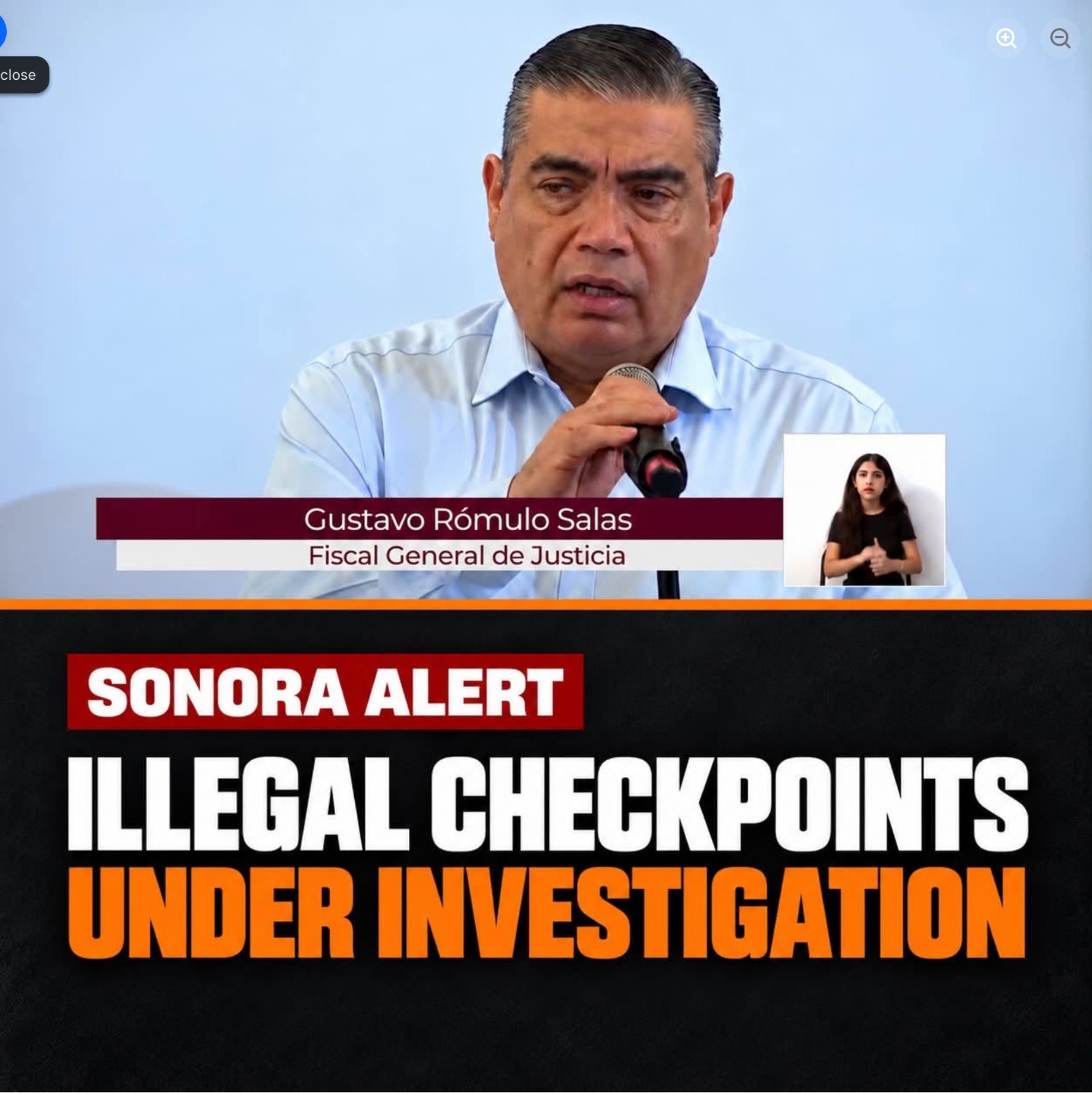
    News graphic reading Sonora Alert: Illegal Checkpoints Under Investigation, with a press-conference image captioned Gustavo Rómulo Salas.

    Some encouraging news for those of us who love travelling Mexico’s highways.

    Several Mexican news outlets reported on September 22 and 23 that Sonora authorities are investigating alleged illegal checkpoints and demands for money from travellers. The coverage includes Highway 15 and reports involving the Hermosillo and San Luis Río Colorado areas.

    According to N+, UnoTV and Infobae, Sonora’s prosecutor’s office is working with federal and state security agencies to locate these checkpoints and identify the people involved. Some complaints involve individuals claiming to be federal investigators. Whether they actually belong to the FGR remains something investigators need to establish.

    Authorities say legitimate checkpoints should have clearly identified personnel and official identification signs, including QR codes that allow travellers to verify information.

    Governor Alfonso Durazo also cautioned that videos circulating online are a mixture: some document real incidents, while others are older or come from elsewhere. That makes dates, locations and firsthand accounts particularly valuable.

    For our 88,000 members of On the Road in Mexico, this is welcome news. We recognise the need for legitimate security checks. Our concern is intimidation, missing belongings and demands for money—the very issues raised in our letter.

    The investigation was announced before our letter was sent, so I’m certainly not claiming credit. But it is encouraging to see these concerns being publicly acknowledged.

    An investigation is a beginning. These reports do not yet confirm arrests or that the problem has been resolved. We’ll be looking for concrete results that make highway travel more comfortable for everyone—Mexican residents and visitors alike.

    Bill Bell
    On the Road in Mexico

    News sources