Author: ontheroa

  • Pull Up a Bench: Life in Mexico’s Plazas

    Pull Up a Bench: Life in Mexico’s Plazas

    Words and photographs by Bill Bell

    Whether it’s a cup of coffee, a cold beer, or simply people-watching from one of the many benches, Dorothy and I always seek out the town square—the plaza or zócalo.

    It’s where we like to get acquainted with a town. Find some shade, settle in and watch. Someone is selling something. Someone is playing music. Friends stop to talk, children find room to play, and there is usually someone on the next bench who seems quite content to spend the afternoon.

    We understand the attraction.

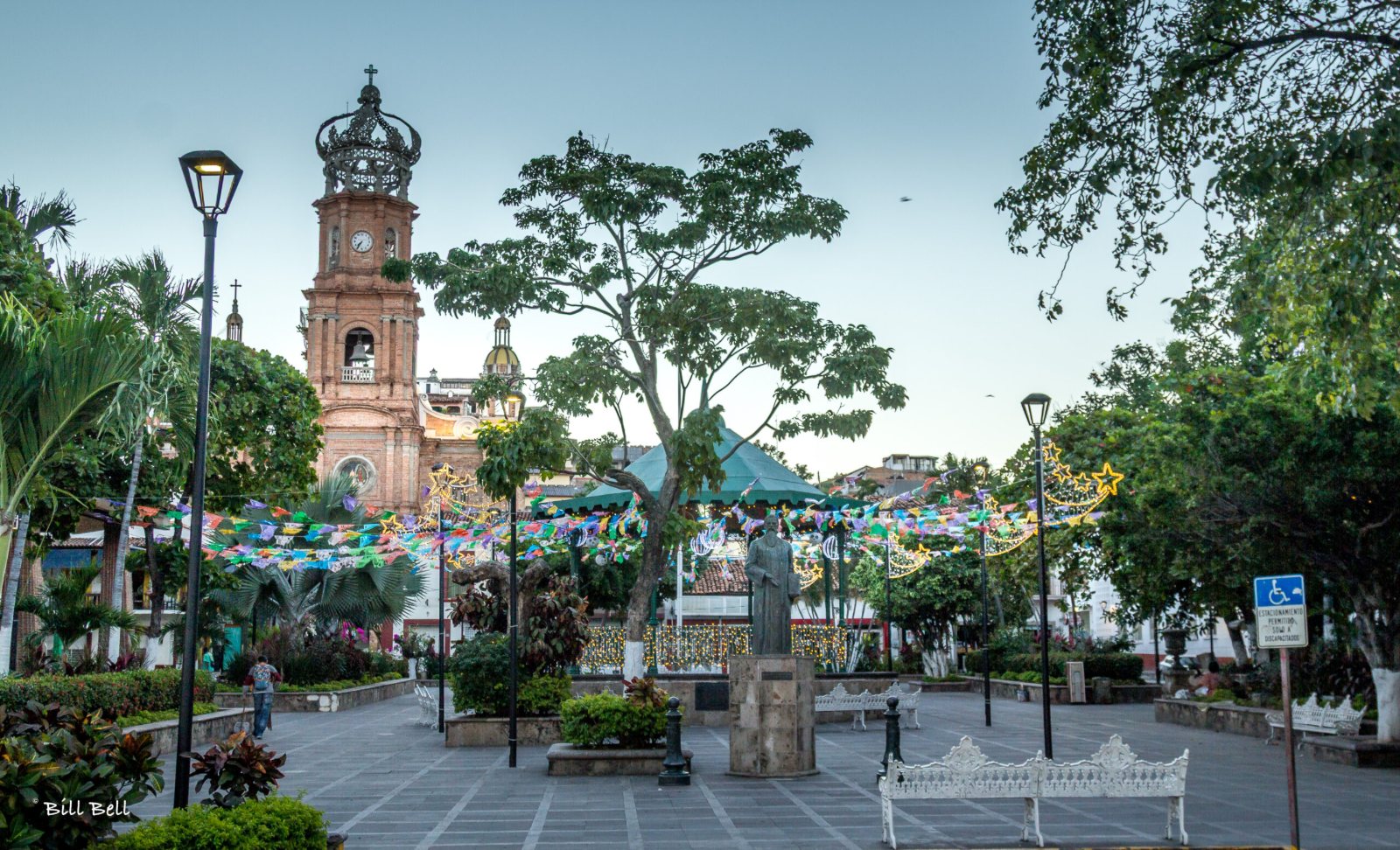
    A decorated plaza in Puerto Vallarta, with benches, a gazebo and a crowned church tower.
    Puerto Vallarta. Colourful decorations stretch across the square, while the church tower rises above the trees. There’s a bench waiting. © Bill Bell

    After hours on the road, a plaza gives us a reason to stop without needing anything in particular to do. We may have arrived with a list of things to see. Quite often, the square is where we stay longer than planned.

    There is something very sensible about putting benches where people actually want to sit. Under a tree. Facing the gazebo. Close enough to watch what’s happening, with no obligation to take part.

    You don’t have to buy a ticket. You don’t even have to buy that coffee.

    People sitting in the shade around a red-and-white gazebo.
    A little shade, a place to sit and room for neighbours to meet. A square doesn’t have to be grand to do its job. © Bill Bell

    Some plazas announce themselves with elaborate ironwork, carefully tended gardens and impressive buildings. Others are modest: a gazebo, a few trees, worn paving and benches that have accommodated generations of conversations.

    Both are worth stopping for.

    For a visitor, the temptation is to photograph the gazebo and move along. But stay a little longer and the people begin to draw your attention. A greeting across the path. Someone arriving with shopping bags. A conversation that looks as though it began years ago and resumes whenever the participants happen to meet.

    The buildings provide the setting. The people give you a reason to linger.

    A colourful mosaic-covered gazebo surrounded by palms in La Peñita.
    La Peñita. Bright mosaics, palms and a vendor’s cart bring colour and everyday activity to the square. © Bill Bell

    In La Peñita, even the gazebo gives the camera plenty to consider. There are patterns, colours and a whale worked into its curved surface. Around it, the square carries on with its ordinary business.

    That’s part of what I enjoy photographing. The architecture matters, but so does the person pushing a cart past it. A photograph can hold both—the place people come to see and the life taking place around it.

    Then, sometimes, there is music.

    Musicians performing beneath the trees while people sit around an Oaxaca square.
    Oaxaca. Musicians play beneath the trees, with an audience already comfortably seated. © Bill Bell

    A few musicians can change the feeling of a square. People turn their heads. Someone pauses on the way somewhere else. Others keep talking, with the music becoming part of the afternoon.

    I like the layers in a scene like this. The performers in front, the people sitting behind them, and more activity disappearing into the shade. There is plenty going on without anyone arranging it for the photograph.

    The challenge is deciding where to point the camera—and remembering to put it down occasionally.

    An ornate gazebo framed by trees, with iron benches in the foreground.
    An empty bench offers its own invitation. There is no need to fill every hour of a journey. © Bill Bell

    Not every square is busy when we arrive. Sometimes the pleasure is the quiet: leaves overhead, a few people passing and a chance to sit beside Dorothy without consulting a map or deciding how much farther to drive.

    Travel can become a succession of arrivals and departures if you let it. The plaza interrupts that habit.

    And if you can stay until evening, there is another photograph waiting.

    Illuminated church towers above a town square at dusk, with sightseeing vehicles parked alongside.
    As daylight fades, the church towers brighten and the square takes on a different character. © Bill Bell

    The heat eases. Lamps come on. Buildings that seemed familiar an hour earlier look different against the evening sky. There is a temptation to take one more photograph, then another.

    Eventually we get up and carry on. There will be another road, another town and something else we intended to see.

    But wherever we arrive, we’ll look for the square.

    A coffee, perhaps. A cold beer if the moment suits. Or just an empty bench beside Dorothy, watching Mexico go about its day.

    Lee este ensayo fotográfico en español

  • The Walk of La Generala: Guadalajara to Zapopan

    Every October 12, Guadalajara walks. The Virgin of Zapopan leaves the city’s cathedral and is carried about nine kilometres to her basilica in Zapopan. This is the Romería, one of the largest pilgrimages in Mexico. In 2022 the governor of Jalisco reported 2.4 million people along the route.

    The figure is small, about 34 centimetres, made of corn-stalk paste by indigenous artisans in the 16th century. She has been in the Zapopan area for some 400 years, and the procession is usually dated to 1734.

    She is called La Generala. On September 15, 1821, she was named General of the Trigarante Army, days before Mexico’s independence. In 1921 Pope Benedict XV authorized her papal coronation. In 2018 UNESCO listed the Romería as Intangible Cultural Heritage.

    Advertisement

    We started in the square in front of Guadalajara’s cathedral. The crowds got bigger as we came in. Dance groups were already there, in feathers, masks, ribbons and bells, waiting for the procession to begin. Many carried banners with the name of their parish.

    Dancers in white gather in the plaza before the Romería, with the cathedral towers beyond
    Dancers gather in the plaza before the procession starts, with the cathedral towers beyond.

    When it set off, we walked with it, along with thousands of others. We managed part of the way. Then we got tired and cheated, and hopped on a bus. The walkers kept going.

    Dancers in red shirts and white-and-red feather hats
    Dancers in red shirts and white-and-red feather hats.
    Two men in plaid-ribbon hats, one pulling on a bearded mask
    Two men in plaid-ribbon hats, one pulling on a bearded mask.
    A dancer in a feather headdress topped with a skull
    A dancer in a feather headdress topped with a skull.
    Advertisement

    Profile of a young dancer under a stitched headdress and long feathers
    Profile of a young dancer under a stitched headdress and long feathers.
    A masked walker in a coat with a medal around his neck
    A masked walker in a coat, with a medal around his neck.
    A couple in matching costumes holding hands and carrying water
    A couple in matching costumes, holding hands and carrying water.
    A group carries a banner for the Virgin of Zapopan
    A group carries a banner for the Virgin of Zapopan.

    The Romería de Zapopan is held every October 12.

  • Canadian Dogs Travelling to Mexico: SENASICA Clarifies Two-Day U.S. Transit

    By Bill Bell | On the Road in Mexico

    Canadians driving to Mexico with a dog have been asking whether a short journey through the United States triggers Mexico’s screwworm inspection certificate requirement. I wrote directly to SENASICA, Mexico’s national animal-health authority, to ask about a specific case: a pet dog living in Canada, travelling with its owner for noncommercial purposes and spending approximately two days crossing the United States.

    In its written reply, SENASICA says the GBG inspection certificate is not necessary for the two-day transit described in that inquiry. The response is specific to that scenario. It does not establish an exemption for every Canadian dog or every length of stay in the United States.

    What SENASICA told us

    • Two-day transit: the certificate is not necessary when the journey from Canada through the United States meets the two-day transit duration described.
    • Longer journeys: SENASICA asks travellers whose transit is extended, including additional overnight stays, to submit their circumstances to the department for assessment.
    • If the certificate is required: the email says it must be issued by a veterinarian accredited by the U.S. government and is valid for five days after issuance.
    • Evidence of Canadian origin: a vaccination record identifying Canada and recording vaccination and deworming treatments can help establish origin.
    • Border crossings: SENASICA says the same requirements apply at all entry points.

    Check your own itinerary before travelling

    The reply does not define the two-day period in hours or set out a separate rule for each U.S. state. If your trip takes longer or differs from the case described, ask SENASICA to assess it rather than assuming this answer covers your circumstances.

    SENASICA directs travellers to its official animal-health requirements consultation module and recommends checking the requirements for dogs before departure because they can change with animal-health conditions.

    My thanks to SENASICA for providing a written response. Below are the four questions and answers, translated from the Spanish email supplied to us.

    The questions and SENASICA’s answers

    English translation. GBG refers to “gusano barrenador del ganado,” or New World screwworm. Answers are attributed to SENASICA’s email; this article is not a substitute for the current requirements sheet.

    1. Is a screwworm inspection certificate required because the dog passes through the United States, even though the journey starts in Canada?

    Presentation of the GBG Inspection Certificate for the Movement of Pet Dogs from the United States to Mexico will not be necessary, provided that the journey from Canada to Mexico through the United States meets the two-day transit duration.

    2. Do the duration, overnight stays or U.S. states travelled through matter? Is there a documented exception for brief transit?

    Yes. The duration of transit and subsequent overnight stays must be assessed by this department. Therefore, those whose journeys and transit periods are extended should submit an inquiry by this means regarding presentation of the GBG Inspection Certificate.

    3. If a certificate is required, who issues it, how long is it valid, and can it be issued in Canada?

    The GBG Inspection Certificate for the Movement of Pet Dogs from the United States to Mexico is issued only by veterinarians accredited by the U.S. government and is valid for only five days after it is obtained. In that respect, a certificate issued by another authority is not accepted. This requirement took effect on August 3, 2026.

    4. What establishes Canadian origin, and do the same requirements apply at all crossings, including Nogales and Baja California?

    Since December 2019, dogs entering Mexico from Canada have not needed a health certificate or proof of vaccination to enter Mexico. However, a vaccination record specifying the country and deworming/vaccination treatments can establish Canadian origin.

    The same requirements apply at all points of entry into Mexico.

    Response from: MVZ Aisha Itzel Gómez Cruz, Responsable 3, SENASICA.

    Source: SENASICA’s written email response to Bill Bell. The email also referred to an attached Animal Health Requirements Sheet (HRZ). That attachment was not available for review when this article was prepared and is not reproduced here. This clarification concerns entry into Mexico, not U.S. entry or the return journey to Canada.

  • La Peñita, Guayabitos and Los Ayala: Three Neighbours, Three Different Rhythms

    La Peñita, Guayabitos and Los Ayala: Three Neighbours, Three Different Rhythms

    Story and photographs by Bill Bell

    La Peñita, Rincón de Guayabitos and Los Ayala sit close together on the Nayarit coast, but each has a character of its own. One is a working town and service hub, another has the energy of a holiday destination, and the third offers a quieter beach-town pace.

    Seen together, they tell a fuller story of this stretch of coast. Through my camera, each offers a different part of the picture.

    La Peñita: the working heart

    La Peñita is the working hub. Fishermen and people who work in the hotels of neighbouring Guayabitos live here alongside seasonal residents and full-time immigrants from north of the border.

    There are restaurants and stores galore. This is a town where everyday life carries on well beyond the beach: people shopping, heading to work and making their lives in the community.

    The catch in a fisherman’s hands and the fountain beneath colourful street banners offer two glimpses of that character. The sea is part of La Peñita’s identity, but so are its streets, businesses and people.

    La Peñita fountain beneath colourful street banners
    La Peñita fountain beneath colourful street banners. Photograph © Bill Bell.

    Rincón de Guayabitos: a holiday town with a residential side

    Guayabitos has more of a holiday rhythm. Its mix of hotels caters to Mexican vacationers as well as visitors from north of the border during the winter season.

    But the hotels tell only part of its story. Guayabitos also has a residential area with lovely homes, adding another dimension to a place often pictured simply as a beach destination.

    Boats and shoreline at Rincón de Guayabitos
    Boats and shoreline at Rincón de Guayabitos. Photograph © Bill Bell.

    These views across the water put the shoreline, boats and surrounding hills in the same frame. They are a reminder to look beyond the particular hotel or stretch of sand where you happen to be staying.

    A coastal view of Rincón de Guayabitos
    A coastal view of Rincón de Guayabitos. Photograph © Bill Bell.

    Los Ayala: a gentler pace

    Los Ayala is a quieter, more laid-back version of Guayabitos. It offers the appeal of a beach-town holiday with a gentler rhythm.

    The hillside view of the bay and the palms among the buildings show another side of these neighbouring communities. For those drawn to a quieter coastal setting, Los Ayala has its own appeal.

    Los Ayala bay framed by hillside greenery
    Los Ayala bay framed by hillside greenery. Photograph © Bill Bell.
    Palms and buildings in Los Ayala
    Palms and buildings in Los Ayala. Photograph © Bill Bell.

    Three neighbours, three different characters

    There is no need to choose a favourite to appreciate the differences. La Peñita’s working-town life, Guayabitos’ holiday atmosphere and Los Ayala’s quieter pace complement one another.

    Spend a little time in each and the coast becomes more than a collection of beaches. It becomes a place of homes, livelihoods, visitors and daily routines—three neighbouring communities, each worth getting to know.

    Which one feels most like your kind of place—and what keeps you coming back?

  • Bahía Kino, Sonora: A Tale of Two Towns on the Sea of Cortez

    Is Bahía Kino worth the drive from Hermosillo? It’s less than an hour west of Hermosillo, toward the Sea of Cortez: giant cactus and brilliant blue water.

    The area was explored by the mapmaker Padre Eusebio Kino in 1685, and it stayed a tiny fishing village until the road from Hermosillo was paved in 1953. About 7,000 people live here now.

    Bahía Kino is a tale of two towns. Old Kino has the older commercial area. Nuevo Kino, to the north, is a large swath of small hotels, RV parks and small restaurants. Don’t miss the unique Seris Museum.

    A magical village. Have you been to Bahía Kino? Which side do you prefer, Old Kino or Nuevo Kino? Tell us in the comments.

  • Huatabampito, Sonora: Big Water, Big Beach, Big Sky

    Huatabampito, Sonora is a seaside beach on the Sea of Cortez: undeveloped, raw Sonoran beach, about an hour off Highway 15 from Navojoa.

    You get 20 km of beautiful flat sandy beach, a few motels, an RV park and restaurants, and fresh fish and shrimp. We bought shrimp the size of a small banana.

    Many locals drive on the beach. Be careful: more than one vehicle has gotten stuck in the sand.

    Big water. Big beach. Big sky. Have you camped or stayed at Huatabampito? Tell us what you found in the comments.

  • KM 21, Sonora: Get Your Tourist Visa and Vehicle Permit

    Kilometer 21 (Km 21) on Federal Highway 15, about 21 km south of Nogales, is where you get your tourist visa (INM) and your vehicle permit (Banjercito). The old customs inspection checkpoint at KM 21 closed in 2014.

    It can be confusing, because the offices sit just south of the KM 256 sign. Make a right turn into the driveway. Walk to the Tourist Visa office and get your visa. Ten feet away, inside, is the copy kiosk where you can get the copies you need. Then continue to Banjercito to get your vehicle permit.

    Get your papers and start your amazing road trip here. Have you been through KM 21? Any tips for first-timers? Tell us in the comments.

  • Navojoa, Sonora: The Night Stop on the Road South

    If you’re driving south from Nogales, Navojoa, Sonora is often the first night stop on the way to the resort areas further south. It’s about a 7-hour drive (377 miles / 600 km) from the border, which makes for a long day.

    Motels and hotels are easy to reach whether you’re coming from the north or the south, and many have large lots that can handle RVs.

    Navojoa is an agricultural center with excellent restaurants and eateries. It’s also a great jumping-off point if you’re heading to Alamos, or out to Huatabampo and Huatabampito on the West Coast.

    A wonderful night stop on a magical road trip. Have you stopped in Navojoa? Where do you like to spend your first night south of the border? Tell us in the comments.

  • Alamos, Sonora: A Silver City Worth the Side Trip

    Alamos, Sonora: A Silver City Worth the Side Trip

    If you’re driving Highway 15 and looking for something different, Alamos is a wonderful stop on a magical road trip. It’s a unique, historic side trip, and it doesn’t take long to reach.

    The drive to Navojoa is 377 miles (605 km), about 6½ hours. From there you head east on Highway 162 for less than an hour.

    Alamos began as a silver mining city in the late 1600s. It flourished and became the wealthiest city in the area, a hub for social, financial and cultural life. That money built grand mansions, haciendas and other historic buildings, and many of them are still standing around the plaza.

    These days it’s a quiet, peaceful spot. Walk the city center, visit the museum, browse the souvenir shops, and let your imagination run wild.

    Alamos is one of those side trips that makes a Highway 15 drive more than just getting from A to B. Have a look at our other road-trip stories for more ideas.

    Have you made the side trip to Alamos, or always stayed on Highway 15? Tell us what you found in the comments.

    Photography by Bill Bell. Produced by Dorothy Bell.
    Music: “Soft Mexican Guitar” by Kevin Llanes (Drippeados), via Pixabay.

  • Hermosillo, Sonora: The Capital City Most Travellers Drive Past

    Hermosillo, Sonora: The Capital City Most Travellers Drive Past

    Most people driving Highway 15 south to the beach towns never set foot in Hermosillo. The new ring road makes it easy to bypass the capital of Sonora altogether, and for years that’s exactly what a lot of travellers do.

    That’s a mistake. Hermosillo is Sonora’s largest city, with close to a million people and a real industrial base built in part on auto manufacturing. It also earns its nickname honestly — locals call it the City of Sun, and from May through November the highs routinely clear 45°C.

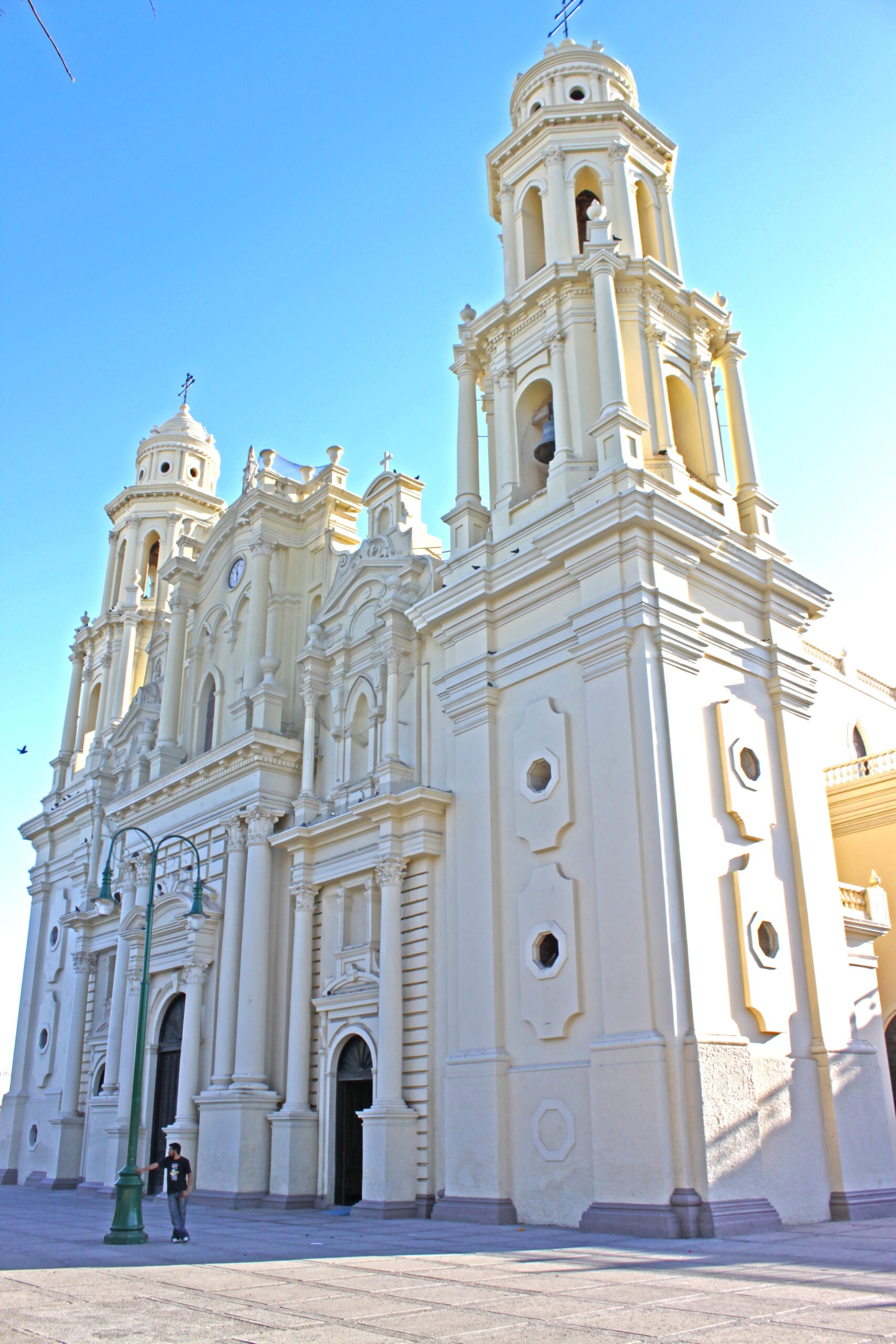
    None of that matters once you’re standing in the historic center. The main square is lined with handsome colonial buildings, the Cathedral of the Assumption of the Blessed Virgin Mary dominates the skyline, and the restaurants serve some of the best Sonoran cooking you’ll find anywhere in the state.

    From Nogales it’s a straightforward drive — about 3½ hours, 178 miles or 286 km — so it’s an easy add to any trip down the coast.

    Have you driven through Hermosillo, or always bypassed it on the cuota? Let us know in the comments.

    Music: “Salute To Mexico,” YouTube Audio Library.