Words and photographs by Bill Bell
Whether it’s a cup of coffee, a cold beer, or simply people-watching from one of the many benches, Dorothy and I always seek out the town square—the plaza or zócalo.
It’s where we like to get acquainted with a town. Find some shade, settle in and watch. Someone is selling something. Someone is playing music. Friends stop to talk, children find room to play, and there is usually someone on the next bench who seems quite content to spend the afternoon.
We understand the attraction.

After hours on the road, a plaza gives us a reason to stop without needing anything in particular to do. We may have arrived with a list of things to see. Quite often, the square is where we stay longer than planned.
There is something very sensible about putting benches where people actually want to sit. Under a tree. Facing the gazebo. Close enough to watch what’s happening, with no obligation to take part.
You don’t have to buy a ticket. You don’t even have to buy that coffee.

Some plazas announce themselves with elaborate ironwork, carefully tended gardens and impressive buildings. Others are modest: a gazebo, a few trees, worn paving and benches that have accommodated generations of conversations.
Both are worth stopping for.
For a visitor, the temptation is to photograph the gazebo and move along. But stay a little longer and the people begin to draw your attention. A greeting across the path. Someone arriving with shopping bags. A conversation that looks as though it began years ago and resumes whenever the participants happen to meet.
The buildings provide the setting. The people give you a reason to linger.

In La Peñita, even the gazebo gives the camera plenty to consider. There are patterns, colours and a whale worked into its curved surface. Around it, the square carries on with its ordinary business.
That’s part of what I enjoy photographing. The architecture matters, but so does the person pushing a cart past it. A photograph can hold both—the place people come to see and the life taking place around it.
Then, sometimes, there is music.

A few musicians can change the feeling of a square. People turn their heads. Someone pauses on the way somewhere else. Others keep talking, with the music becoming part of the afternoon.
I like the layers in a scene like this. The performers in front, the people sitting behind them, and more activity disappearing into the shade. There is plenty going on without anyone arranging it for the photograph.
The challenge is deciding where to point the camera—and remembering to put it down occasionally.

Not every square is busy when we arrive. Sometimes the pleasure is the quiet: leaves overhead, a few people passing and a chance to sit beside Dorothy without consulting a map or deciding how much farther to drive.
Travel can become a succession of arrivals and departures if you let it. The plaza interrupts that habit.
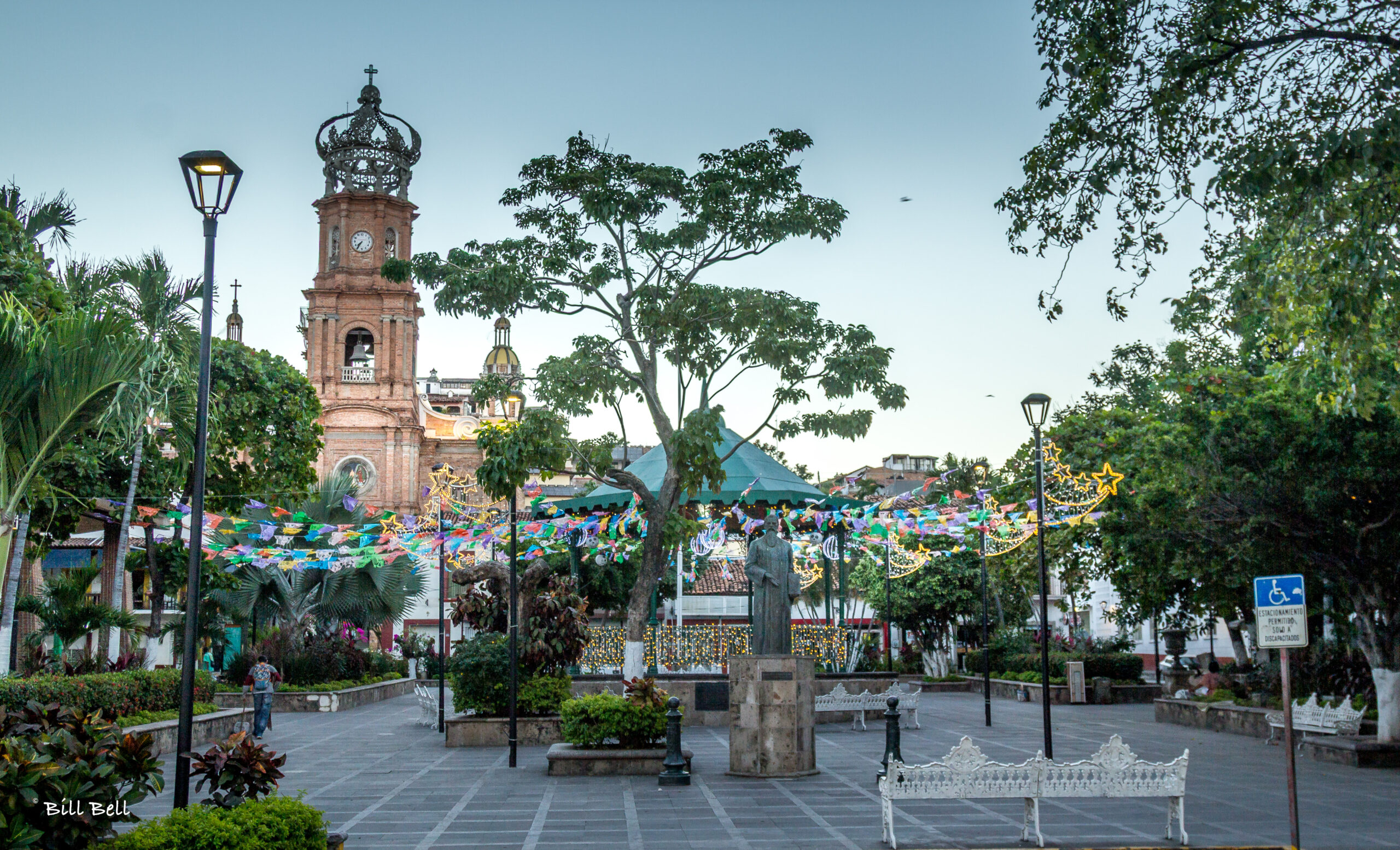
And if you can stay until evening, there is another photograph waiting.

The heat eases. Lamps come on. Buildings that seemed familiar an hour earlier look different against the evening sky. There is a temptation to take one more photograph, then another.
Eventually we get up and carry on. There will be another road, another town and something else we intended to see.
But wherever we arrive, we’ll look for the square.
A coffee, perhaps. A cold beer if the moment suits. Or just an empty bench beside Dorothy, watching Mexico go about its day.
Leave a Reply