Meet Sinaloan Sushi, Mexico’s Wildly Delicious Take on Japanese Sushi
Sinaloan sushi turns classic Japanese sushi on its head with its creamy, spicy, maximalist take on the freshest seafood in Mexico’s seafood capital.

I live in the Mexican state of Sinaloa, a long strip along the Pacific coast where no city sits more than 100 miles from saltwater. Here, seafood is not just cuisine—it’s culture. Aguachile, ceviche, pescado zarandeado, shrimp tacos: these are the mainstays of a regional identity built on freshness and flavor. And then, there’s the sushi.
Traditional Japanese sushi is often considered a minimalist art form, emphasizing balance and the purity of each ingredient. But Sinaloan sushi is something else entirely: maximalist, bold, and unapologetically over the top. A roll might include carne asada or fried chicken, be smothered in cheese and chipotle sauce, or arrive baked, battered, or ablaze with spicy mayo. It’s easy to see why Sinaloan-style sushi inspires strong opinions. But it has more to offer than shock value. Done well, it is a genuinely delicious fusion cuisine.
It’s a familiar story: As long as there have been diasporas, chefs and home cooks have had to feed their communities in new places. And when people make old recipes with foreign and unfamiliar ingredients, rich new cuisines begin to take shape.

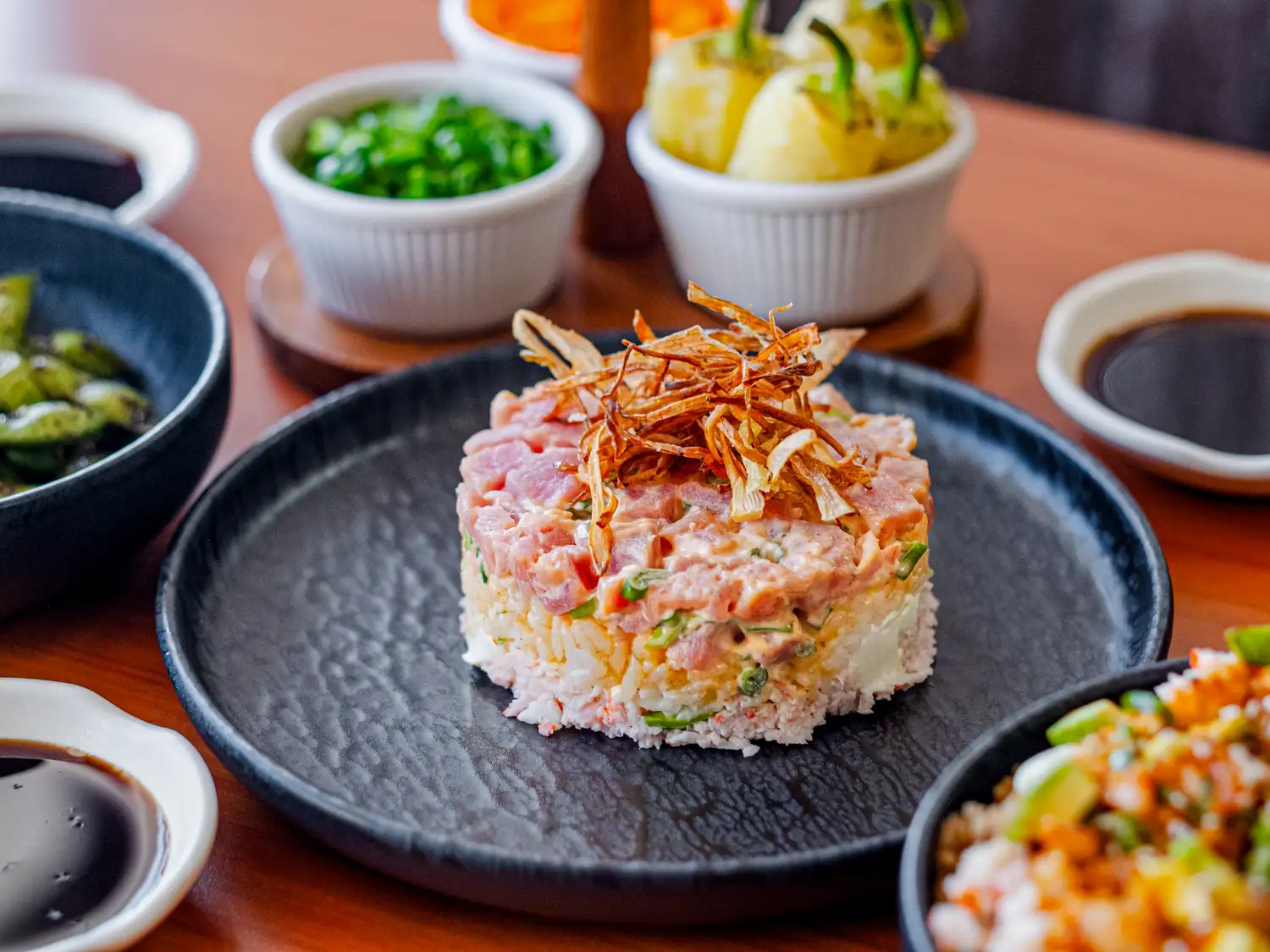
Despite its departure from Japanese tradition, Sinaloan sushi has become one of the region’s most beloved culinary exports, both wildly inventive and deeply reflective of local taste. On weekend nights in Culiacán, it’s not uncommon to see lines spilling from sushi carts and restaurants, their counters glowing under fluorescent lights, with orders packed into Styrofoam trays and topped with blistered chiles or orange-flecked Tampico, a creamy topping made with imitation crab and chiles. Sushi is everywhere in Sinaloa’s food landscape—next to burger joints, outside clubs, on sleepy suburban blocks.
A Global Food on the Move
Sushi’s global journey began in 19th-century Japan, where it was sold from pushcarts to a bustling merchant class. When it first arrived in the U.S. in the 1960s, it was introduced at Kawafuku in Los Angeles, an upscale spot that catered to Japanese expatriates and diplomats. From there, sushi was reinterpreted to fit local palates, giving rise to innovations like the California roll (arguably invented in Vancouver) and setting the stage for its worldwide spread.
Mexico was part of that journey, though sushi’s integration here followed a unique path. In western Mexico, especially along the Pacific coast, a small but influential Japanese-Mexican community had already formed by the early 20th century. Many early Japanese immigrants in Sinaloa were engineers, doctors, and agricultural workers. Some settled in coastal towns like Escuinapa and Mazatlán, where they brought not only their language and customs but also their food. While sushi would become the most visible legacy, Japanese pickling, fermentation, and rice cultivation also shaped the regional palate. Some came directly from Japan after the Russo-Japanese War; others arrived from the U.S. seeking relief from anti-Asian property laws.
In Culiacán, the Taniyama family—a prominent Japanese Mexican family—opened one of the city’s first sushi restaurants, Tomo, in 1988. At first, their clientele was primarily members of the Japanese community, but the restaurant also became a training ground for the city’s earliest non-Japanese sushi chefs.
Reinventing the Roll: The Sushi Cart Revolution
One of those chefs was Fausto Quevedo. After training at Tomo, he dreamed of opening his own place. His brother-in-law, Héctor López, pitched a different idea: a sushi cart. Skeptical but intrigued, Quevedo agreed, and together they launched Sushi-to in 1992. Inspired by the ubiquitous taco stands that dot Culiacán’s streets, they brought sushi to the sidewalk—affordable, fast, and eye-catching.
At first, business was slow. Locals turned up their noses at unfamiliar dishes, confusing sushi with tacos de buche or outright rejecting raw fish. “Raw fish? No thanks,” Quevedo recalled hearing again and again. But curiosity grew, and within a year, Sushi-to couldn’t keep up with demand. Imitators followed, and soon sushi carts were everywhere. Today, nearly 75% of Culiacán residents live within a five-minute walk of a sushi vendor.
Quevedo’s genius was not just in marketing but in adapting sushi to local cravings. Take the Mar y Tierra roll: a deep-fried fusion of carne asada and shrimp, born when a reluctant customer admitted he hated fish but liked beef. The roll was a hit—and a harbinger of the over-the-top creations to come.
The craze for this kind of sushi quickly spread beyond Culiacán. Rosario Valdez, a former sushi cart entrepreneur in the Sinaloan resort town of Mazatlán, recalled being overwhelmed with clients soon after opening her cart in the early aughts. As she described, the “trend of regionalized sushi” fit perfectly into existing street food culture. Instead of stepping out to grab a taco or passing by a hot dog cart after a night of bar-hopping, hungry city-dwellers now had a new quick bite to eat.
Sinaloan Innovation: Sushi, Maxed Out
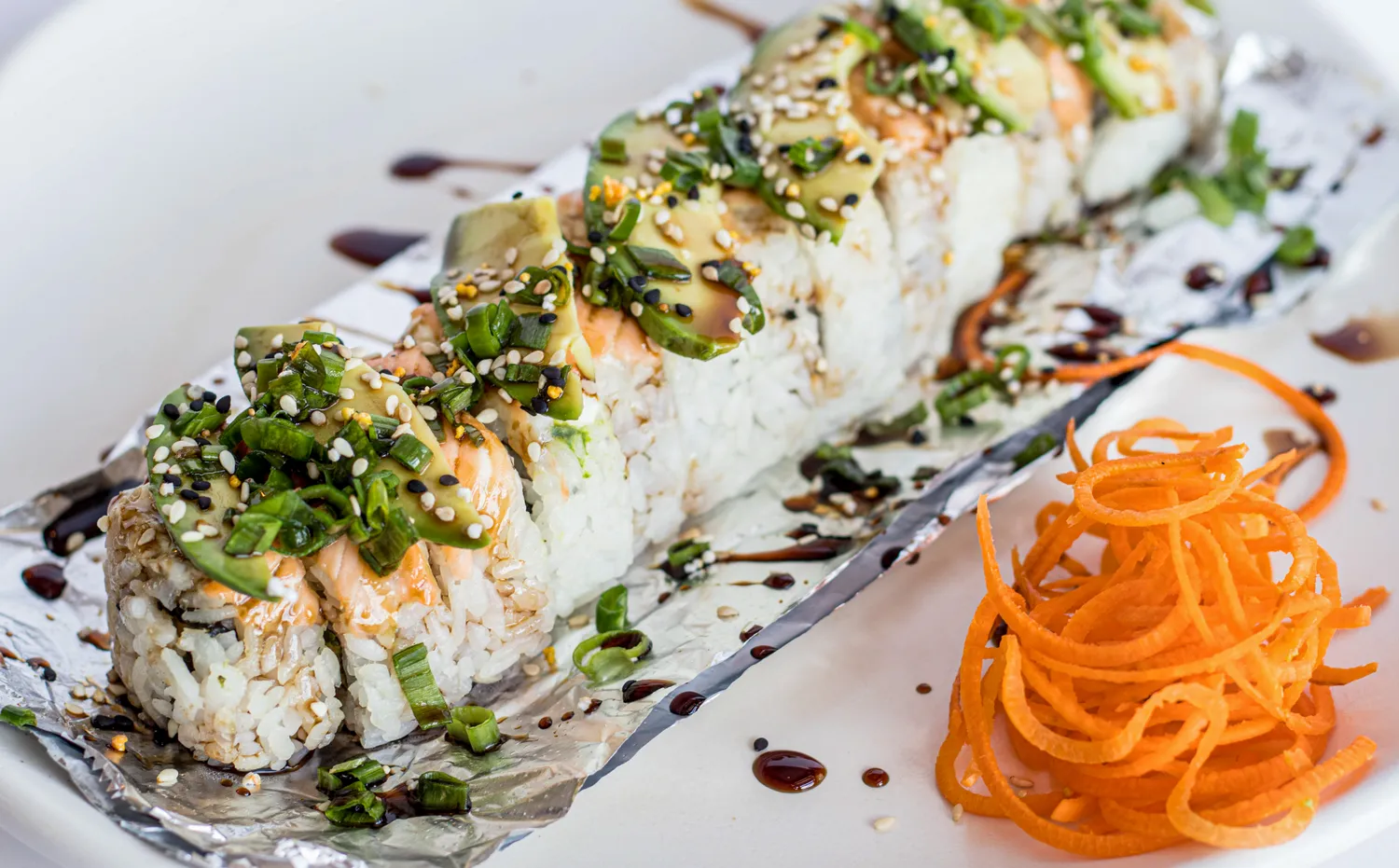
Sinaloan sushi rapidly evolved into its own genre. Rolls might feature chicken, bacon, cheese, and spicy surimi paté (Tampico). Others come baked, fried, or topped with aguachile—a citrusy chile-laced ceviche traditionally made with shrimp. Common ingredients include imitation crab (kanikama), cucumber, avocado, cream cheese, and spicy mayo. Some signature creations include:
- Guamuchilito Roll: Cucumber, avocado, imitation crab sticks (kanikama), and shrimp or octopus, with Tampico topping.
- Cordon Bleu Roll: Chicken, bacon, and cheese.
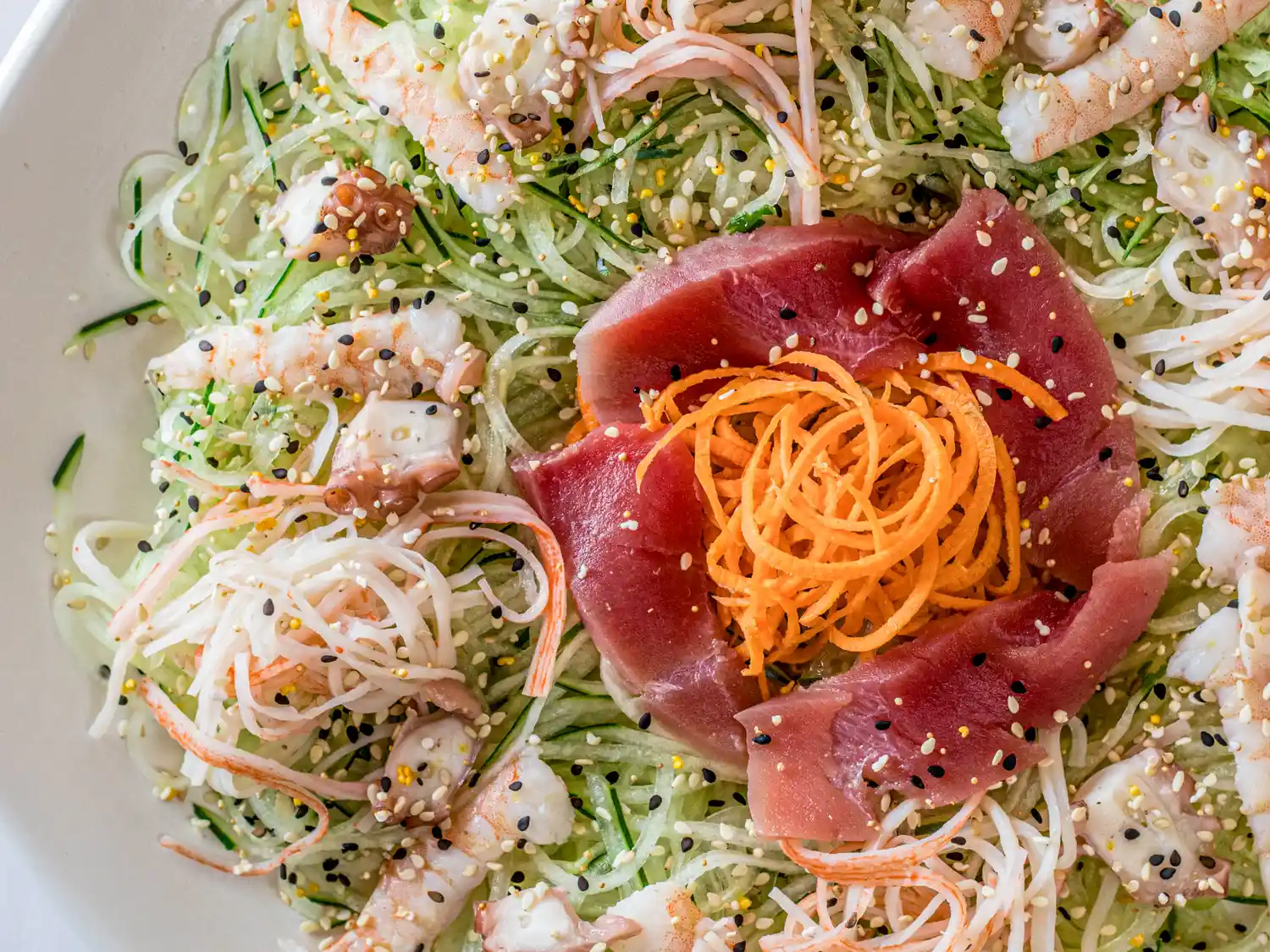
- Curricanes: Tuna sashimi wrapped around avocado, cucumber, and kanikama.
The Guamuchilito roll, named for the town of Guamúchil, exemplifies the region’s layered approach: something creamy, something crunchy, something spicy. The Cordon Bleu roll riffs on the Western classic with breaded chicken, bacon, and molten cheese, all rolled up with sushi rice and seaweed. Whether baked or fried, the goal is always the same: richness, heft, and heat.
At upscale restaurants, you’ll find edamame and miso soup alongside local twists like koikas (surimi-stuffed calamari) and roasted chile caribe. Soy sauce and eel sauce sit next to fiery salsas and fresh wasabi. Tampico, the spicy orange surimi paste on top of so many rolls, has become a kind of regional shorthand—chefs might top even classic rolls with a dollop “just to make it monchoso” (slang for a more extreme approach to food—more on that below).
Even sushi purists in the region admit its appeal. Miguel Taniyama, son of Tomo’s founder, acknowledged the popularity of Mexicanized sushi. “It might bother some of us purists, but it’s a reality—it’s successful … it keeps spreading and crossing borders.”
Chef Yasuo Asai, a Japanese culinary ambassador in Mexico City, was more ambivalent. “The cream cheese, avocado, doing fried stuff…people like it, but for me as a Japanese chef, I would say it’s a totally different category,” he said. And yet, he conceded, “Sushi is already the one Japanese food worldwide…like pizza, so it’s okay to expand sushi all around the world.”
The Rise of Monchosidad
In Sinaloa, this maximalist style has a name: monchoso. The word doesn’t quite translate, but it captures the pleasure of overindulgence—a craving for rich, excessive food, and engineered to satisfy every sensory urge. It’s not uncommon to see rolls covered in three kinds of melted cheese or to find sushi hot dogs and sushi burritos on menus. One viral roll made the rounds on TikTok last year: a tempura roll layered with ham, bacon, Tampico, chipotle, and a fiery drizzle of Sinaloan aguachile, then torched tableside for good measure. “It’s like five cravings at once,” one commenter said. Another just posted fire emojis.
Wicho Ruelas, a Sinaloa-based restaurateur, sees it all as part of a spectrum. His sushi empire spans traditional Japanese offerings at Zen and fusion-forward rolls at Zasshi. “There’s a line, and there are places that overdo it…but it’s part of the culture in Sinaloa—and even more so in Culiacán.”
Quevedo, now a seasoned veteran of the sushi business, admits he still prefers traditional Japanese sushi—but he’s pragmatic. “I’m a businessman. My idea is to give the client what they ask for. In Culiacán, the palate is monchoso—it’s demanding.”
Beyond the Cart: Going Global
Sinaloan sushi’s success didn’t stop at state lines. Chains like Culichitown have brought it to the U.S., with outposts in California, Texas, Illinois, and beyond. At Culichitown, the experience is half-club, half-cantina, with banda music blasting and Micheladas served in goblets. It’s dinner and a show, with Mar y Tierra rolls coming out hot from the fryer and servers dancing as they deliver flaming sushi boats to birthday tables.
Smaller shops, like Mariscos y Sushis Los Tomateros in Los Angeles, are cropping up too. “In Sinaloa, they say every block has a sushi place,” said owner Edgar Baca. “At the rate we’re going, it looks like it’s going to be the same here.” He said his Lynwood spot draws in nostalgic Sinaloans and curious Angelenos alike. Guamuchilito and Mar y Tierra rolls are top sellers, he said, just like in Mexico. Mexico City chef Aquiles Chávez said, “It’s very adapted to the Mexican idiosyncrasies and palate. It’s more monchoso, more flavorful, more delicious.”
He’s right. Whether you want something wild like a deep-fried Mar y Tierra roll or a delicate piece of tuna nigiri finished with serrano chile and eel sauce, Sinaloan sushi delivers. The style varies by city block, let alone by region. Some places still revere the traditional rice and vinegar techniques; others are playing mad scientist.
The last sushi I ordered in Mazatlán was a “sushi dogo,” a Tampico roll split like a hot dog bun then stuffed with shrimp, carne asada, melted cheese and avocado. It was outrageous—and genuinely great. The one before was a delicate tuna nigiri finished with serrano chile, just enough heat to make your lips buzz. The extremes live side by side here, and that’s what makes it exciting.
Sinaloan sushi is more than fusion—it’s a story of adaptation, entrepreneurship, and cultural remixing. Its evolution tells us what happens when local craving meets global cuisine. I’m writing this in the spring of 2025; by the time you read it, there’ll be a new roll on the streets. Maybe it’ll be delicious. Maybe it’ll be dubious. But I can’t wait to try it.


Ingredients

Instructions
-
-
Preheat the oven to 350°F. Line two large baking sheets with parchment paper.
-
In the bowl of a stand mixer fitted with a paddle attachment, beat together the butter, ½ cup (60g) powdered sugar, and salt on medium speed until pale and fluffy, about 2 to 3 minutes. Beat in the vanilla until just combined.
-
With the mixer on low, gradually add the flour, beating until well combined. Beat in the pecans until combined. Scoop the dough into 1 tablespoon portions and roll into balls between your palms. Place 1 inch apart on the baking sheets.
-
-
Bake for 12 to 15 minutes or until the tops are set and the bottoms are golden brown. Let the cookies cool on the pans for 5 minutes.
-
Place the remaining 1 cup (120g) powdered sugar in a medium bowl. Working in batches, roll the warm cookies in the sugar, shaking off excess. Place a wire rack, and cool completely, about 30 minutes. Reroll cooled cookies in powdered sugar again. Store cookies in an airtight container for up to 2 weeks.
Notes
- If the powdered sugar is lumpy, sift it after measuring to ensure the coating on the cookies is light and even.
- These buttery cookies don’t spread very much, so you can fit up to 18 dough balls on one large cookie sheet.
-
Día del Padre
Father’s Day in Mexico – the celebration began to become popular in the late 50’s. While not as popular as Mother’s Day, the nation does celebrate with the family
 3rd Sunday in June
Father’s Day was first celebrated in West Virginia to commemorate the lives of 210 miners who died in a mining accident. It appears that it was a single year celebration.
Two years later, Sonora Smart Dodd in Spokane Washington organized Father’s Day on June 19, 1910 to recognize her father. He was a civil War veteran and single parent; his wife died in childbirth to his sixth child.
Dodd organized the celebration – originally planned to commemorate her father’s birthday of June 5th, but the date was pushed back to the third Sunday in June because there was not enough time to organize the event.
Three years later the holiday was introduced to the US Congress and in 1916 then President Woodrow Wilson traveled to Spokane to celebrate the day. Congress refused to recognize the holiday until 1966 when President Lyndon B Johnson issued a presidential proclamation designating Father’s Day as the third Sunday in June. President Richard Nixon signed it into law and Father’s Day became a US National holiday.
While most nations celebrate Father’s Day on the 3rd Sunday in June, many others recognize dad’s on other dates.
In Mexico, the celebration began to become popular in the late 50’s and became a commercially promoted day at that time. Much like Mother’s Day, presents are given – chocolates, t-shirts, cards and festivities are centered around family activities. Community based activities sometimes include pot-lucks, fun runs, children’s concerts.
In Mexico it is an opportunity for the family to unite and give special recognition to papas or papa-like role models..
Note Father’s day is an observance and not a formal federal holiday in Mexico
Calendar of Events and Celebrations in Mexico

Heat Lightening
Signs of Tropical Summer: Heat Lightning

As I sat last night watching the pyrotechnic show of heat lightning, I thought how amazing that something so beautiful could be so deadly. One needs to know that lightning is the visible form of energy transfer and needs to be respected as a potential dangerous weather phenomenon.
Heat lightning is the term for the flashes of lightning on the horizon or within clouds that do not have accompanying sounds of thunder. The reason for this silent lightning is that it is very far away and the sound waves dissipate before they reach the observer.
Generally, heat lightning occurs as an early warning sign that thunderstorms are approaching, or it can appear after a thunderstorm has moved past an area. In coastal Mexico, heat lightning is most often seen during August and September out over the ocean at night- this is the remnants of storms that formed during the day along a sea breeze front coming in from the interior mountains.
Another reason for the name of heat lightning is because it usually happens on hot summer nights and to distinguish it from lightning accompanied by audible thunder and cooling rainfall. Since this summer in the Riviera Nayarit we have had the heat and high humidity but not much rainfall, there has been an abundance of heat lightning.
In addition to the heat lightning, we have experienced what scientists call dry lightning: lightning strikes with thunder but without significant precipitation. There have been several dramatic thunderstorms that boomed and flashed for hours, but the official San Pancho weather station recorded only .08 of measured rainfall!
 Believe me, the humidity did not dip noticeably afterwards. Dry thunderstorms are common in the western portion of the US and Mexico. This type of storm results when the rain produced by a thunderstorm falls through a substantial layer of very dry air which evaporates the precipitation before it reaches the ground.
According to the National Weather Service, less than a tenth of an inch of rain is the threshold for characterizing a thunderstorm as dry.
Potential for Damage: Don’t let sunshine fool you into thinking there is no danger for lightning strikes. One week this summer we had three afternoons in a row where it was full sun with a storm cloud-free sky yet there was thunder. A friend returned home to find that lightning struck her house electrical connection and fried/burnt up EVERYTHING that was plugged in: appliances, TV and computer modems included. Very expensive situation.
During the intense thunderstorm season I keep everything but the refrigerator (on a heavy duty surge protector) unplugged; yes, it is inconvenient as hell, but I have had to replace several microwaves, computer systems and printers over the years of tropical living so I take precautions now. Knowing that thunder indicates lighting is happening in the area, I get out of the pool even though the storm mass isn’t visible. The NASA map shows lightning frequency for 2011. The places with the largest number of lightning strikes are deep red. Much more lightning occurs over land than ocean because daily sunshine heats up the land surface faster than the ocean.
 The heated surface heats the air, and more hot air leads to stronger convection, thunderstorms, and lightning. The map also shows that more lightning occurs near the equator than near the poles. This pattern is also due to differences in heating. The equator is the warmest spot in the world, creating widespread convection, thunderstorms, and lightning across the tropics every day.
It’s the physical composition of Mexico that attracts thunderstorms en mass: interior mountains bordered by oceans and sub-tropic and tropical latitudes. Add the huge population of tourists and residents and it is not surprising that Mexico has the highest incidence of lightning strikes in the world. The US National Lightning Safety Institute estimates that 24,000 people are killed by lightning strikes around the world each year and that an additional 240,000 are injured.
A reported 223 people were killed in Mexico last year, 50 in the US, and only 3 in Canada. Lightning strikes can produce severe injuries, with a significant mortality rate from a direct hit; of those that survive, 80% will have long-term injuries. These severe injuries are not usually caused by thermal burns, since the current is too brief; instead nerves and muscles are directly damaged by the high voltage producing holes in their cell membranes-ugh.
Take Precautions: The safest way to avoid injury from lighting strikes is to get indoors or inside a vehicle as soon as you hear thunder or see lightning of any type. Remember that it doesn’t have to be raining for lightning to hit. The risk remains for up to 30 minutes after the last observed lightning or thunder. Even when you are in a safe shelter, avoid using telephones, modems, and other electric devices, warns the National Lightning Safety Institute. A harmful over current can reach a person through the phone jack, Ethernet cable or electric outlet. I personally know an individual who felt the over current while taking a shower during a thunderstorm.
The National Lightning Safety Institute recommends using the F-B (flash to boom) method to gauge distance to a lightning strike. It’s ok to take the time to compute this once you are sheltered, but don’t stay outdoors as you do it. The formula approximates the distance by timing the interval between the visible lightning and the audible thunder it generates. So, a flash preceding thunder by three seconds is about one kilometer (0.62 mi) (3×340 m) distant.
Consequently, a lightning strike observed at a very close distance will be accompanied by a sudden clap of thunder, with almost no perceptible time lapse, and a distinctive smell.
The ancient people, Aztec and Mayas, had the right attitude by viewing lightning as a deity or achieving its power from a deity. We might have the scientific explanations in the 21st century, but viewing the natural phenomenon of lighting still brings a tremble and awe for the power of nature.

 National Maritime Day in Mexico (Día de la Marina) June 1st
Observed annually on June 1, National Maritime Day (Día de la Marina) is a civic holiday in Mexico, honoring the nation’s maritime industry and naval forces. While widely recognized, it does not grant workers a paid day off.
Significance and Celebrations
Modeled after similar observances in other countries, the holiday acknowledges individuals serving in the Mexican Navy, civil maritime sector, and merchant fleet. Coastal cities such as Acapulco, Veracruz, and Puerto Vallarta host parades, fireworks, ship tours, and award ceremonies, along with traditional music and dancing. The Mexican flag is flown at full staff across government offices, and the day is used to raise awareness about the maritime sector’s role in national security and the economy.
Historical Background
The holiday was first observed in 1942 during World War II to commemorate two Mexican oil tankers, SS Potrero del Llano and SS Faja de Oro, which were sunk by German submarines, prompting Mexico to declare war on Germany. However, its official date marks the 1917 departure of the SS Tabasco, the first vessel crewed entirely by Mexican-born sailors from the Port of Veracruz.
Mexico’s Maritime Industry – Key Facts
- Coastline: Nearly 7,000 miles spanning the Pacific Ocean, Gulf of Mexico, and Caribbean Sea.
- Major Ports: Manzanillo, Lázaro Cárdenas, Veracruz, Altamira, and Ensenada.
- Merchant Fleet: 668 vessels as of 2021, ranking 34th globally.
- Seafarers: Over 5,900 work in Mexico’s merchant navy.
- Shipbuilding: Less than 0.01% of the world’s ships are built in Mexico.
- Top Exports: Cars, motor parts, computers, delivery trucks, and crude oil, primarily to the USA, Canada, China, and Germany.
Celebrations
Coastal cities often host vibrant fishing tournaments, sailing regattas, sand sculpture contests, and off-road races. The festivities blend official ceremonies with public fiestas, creating an atmosphere of excitement and national pride.
National Maritime Day in Mexico remains a moment to honor those who serve at sea and to celebrate the country’s maritime heritage.
 As of the 2026 Michelin Guide edition, there are 29 restaurants in Mexico with a Michelin-star rating.
The Michelin Guides have been published by the French tire company Michelin since 1900. They were designed as a guide to tell drivers about eateries they recommended to visit and to subtly sponsor their tires, by encouraging drivers to use their cars more and therefore need to replace the tires as they wore out. Over time, the stars that were given out became more valuable.
The Michelin Guide debuted in Mexico in 2024. Inspectors visited five states—Baja California, Baja California Sur, Nuevo León, Oaxaca, and Quintana Roo—and the capital city, Mexico City. Sixteen restaurants earned one star and two, Pujol and Quintonil, received two.[No restaurant earned three stars. Among the awarded restaurants, Michelin included a taco stand, Taquería El Califa de León. Gwendal Poullennec, international director of the Michelin Guides, said it took time to choose which restaurants to visit. He added that 11 Mexican food restaurants in other countries had one Michelin star, and two had two as of 2023.
 Multiple anonymous Michelin inspectors visit the restaurants several times. They rate the restaurants on five criteria: “quality of products”, “mastery of flavor and cooking techniques”, “the personality of the chef represented in the dining experience”, “value for money”, and “consistency between inspectors’ visits”.
Inspectors have at least ten years of expertise and create a list of popular restaurants supported by media reports, reviews, and diner popularity. If they reach a consensus, Michelin awards restaurants from one to three stars based on its evaluation methodology: One star means “high-quality cooking, worth a stop”, two stars signify “excellent cooking, worth a detour”, and three stars denote “exceptional cuisine, worth a special journey”.The stars are not permanent and restaurants are constantly being reevaluated. If the criteria are not met, the restaurant will lose its stars.
In the second edition, in 2025, no restaurants lost their Michelin stars, and five new ones were added to the list. In 2026, the Mexico guide expanded to include the states of Jalisco, Puebla, and Yucatán. Seven restaurants received stars, while El Califa de León lost its reward.
List
 |
One Michelin star |
|---|---|
 |
Two Michelin stars |
|
—
|
The restaurant did not receive a star that year |
| Name | Cuisine | Location | 2024 | 2025 | 2026 |
|---|---|---|---|---|---|
| Alcalde | Mexican | Jalisco – Guadalajara | — | — | |
| Animalón | Mexican | Baja California – Valle de Guadalupe | |
|
|
| El Califa de León | Mexican | Mexico City – Cuauhtémoc | |
|
— |
| Le Chique | Contemporary | Quintana Roo – Riviera Maya | |
|
|
| Cocina de Autor Los Cabos | Mexican | Baja California Sur – Los Cabos | |
|
|
| Cocina de Autor Riviera Maya | Creative | Quintana Roo – Riviera Maya | |
|
|
| Conchas de Piedra | Seafood | Baja California – Valle de Guadalupe | |
|
|
| Damiana | Mexican | Baja California – Valle de Guadalupe | |
|
|
| Los Danzantes Oaxaca | Mexican | Oaxaca – Oaxaca City | |
|
|
| Em | Mexican | Mexico City – Cuauhtémoc | |
|
|
| Esquina Común | Mexican | Mexico City – Cuauhtémoc | |
|
|
| Expendio de Maíz | Mexican | Mexico City – Cuauhtémoc | — | |
|
| Gaba | Mexican | Mexico City – Cuauhtémoc | — | — | |
| Ha’ | Mexican | Quintana Roo – Playa del Carmen | |
|
|
| Huniik | Mexican | Yucatan – Merida | — | — | |
| Ixi’im | Mexican | Yucatan – Chocholá | — | — | |
| Koli Cocina de Origen | Mexican | Nuevo León – Monterrey | |
|
|
| La Barra de Huniik | Mexican | Yucatan – Merida | — | — | |
| La Once Mil | Mexican | Mexico City – Miguel Hidalgo | — | — | |
| Levadura de Olla | Mexican | Oaxaca – Oaxaca City | |
|
|
| Lunario | Mexican | Baja California – El Porvenir | — | |
|
| Masala y Maíz | Fusion | Mexico City – Cuauhtémoc | — | |
|
| Máximo | Mexican | Mexico City – Cuauhtémoc | — | |
|
| Olivea Farm to Table | Contemporary | Baja California – Ensenada | — | |
|
| Pangea | Contemporary | Nuevo León – San Pedro Garza García | |
|
|
| Pujol | Mexican | Mexico City – Miguel Hidalgo | |
|
|
| Quintonil | Mexican | Mexico City – Miguel Hidalgo | |
|
|
| Rosetta | Creative | Mexico City – Cuauhtémoc | |
|
|
| Sud 777 | Creative | Mexico City – Álvaro Obregón | |
|
|
| Xokol | Mexican | Jalisco – Guadalajara | — | — | |

Students’ Day (Día del Estudiante) in Mexico (May 23)
In Mexico, Students’ Day (Día del Estudiante) is observed on May 23rd to recognize the significance of education and students’ contributions to the nation’s development. This day commemorates a historic student movement advocating for university autonomy in 1929.
Key Details:
- Date: May 23rd
- Significance: Honors students’ right to education and their impact on society.
- Historical Background: The origins of this day date back to May 1923, when students at the National University of Mexico protested a new grading system and called for greater university autonomy.

Historical Context:
- While International Students’ Day is celebrated worldwide on November 17, different countries have their own student recognition days.
- In Mexico, student protests at the National University of Mexico escalated on May 23, 1923, leading to clashes with the police, during which several students were injured.
- Professors backed the movement, and negotiations eventually led to university autonomy. The institution was renamed the National Autonomous University of Mexico (UNAM), granting independence from the Secretariat of Public Education and giving the university rector full authority.
Observance:
- May 23rd is widely celebrated by students across Mexico, though it is not an official public holiday.
- Mexico has a mix of public and private universities, including federal universities, technological institutes, state universities, research centers, and private institutions.
This day serves as a reminder of students’ role in shaping education and advocating for academic freedom.
