Category: Articles about Mexico

  • Mexico This Week: News and Culture | September 28–October 3, 2026

    Mexico This Week: News and Culture | September 28–October 3, 2026

    September 28–October 3, 2026

    Mexico closes the week with serious questions about school safety, commemorations of a painful chapter in its history, and weather concerns along the Pacific coast. Alongside those headlines, there are stories worth celebrating: music returning to a much-loved concert hall, Indigenous dance crossing continents, and artisans sharing the living traditions of the Mexican Caribbean.

    Here is our selection of news and culture from the week’s coverage. Each item links to a freely accessible article so you can read further without a paid subscription. The linked reports are in Spanish.

    School attack prompts proposals to prevent violence

    The federal government announced plans to strengthen efforts against school violence following a deadly attack in Torreón. Its proposed response includes obligations for digital platforms to identify, report and remove content directly encouraging violence, alongside work with university specialists.

    The announcement also raises questions about how those measures would operate without restricting legitimate expression. President Claudia Sheinbaum said the approach should avoid censorship.

    Read the report — Aristegui Noticias, October 2.

    Mexico remembers October 2, 1968

    Thousands marched in Mexico City to commemorate the Tlatelolco massacre, keeping alive demands for remembrance and accountability. The anniversary remains an important moment in Mexico’s public life, connecting the student movement of 1968 with contemporary concerns about rights and state power.

    This year’s march also brought reports of vandalism by some participants and allegations of excessive police force. Authorities said Internal Affairs would investigate officers’ conduct.

    Read the report — Aristegui Noticias, October 2.

    Rachel weakens, but Pacific weather remains a concern

    Hurricane Rachel had weakened to Category 1 and was moving away from Mexico in the October 3 morning report. Nevertheless, the national weather service continued to warn of rain in southern Baja California Sur and elevated surf along parts of the Pacific coast, including Sinaloa, Nayarit, Jalisco and Colima.

    Elsewhere, a cold front and other weather systems were expected to bring heavy rain to several regions. This is a dated weekly update; anyone travelling should check the latest local forecasts before setting out.

    Read the October 3 update — La Jornada.

    A celebrated concert hall welcomes music back

    One of Mexico City’s great musical spaces has reopened after 180 days of rehabilitation. In coverage published September 28, La Jornada described the return of audiences to UNAM’s Sala Nezahualcóyotl for a concert featuring the university’s Philharmonic Orchestra and the world premiere of Gabriela Ortiz’s Fanfarria volcánica.

    The work improved accessibility, lighting and the stage while preserving the hall’s distinctive architecture and renowned acoustics. For music lovers, the reopening restores a place where the setting is an essential part of the experience.

    Read the story — La Jornada.

    Indigenous Australian stories arrive on Mexico’s stages

    Bangarra Dance Theatre’s first visit to Mexico brings Aboriginal and Torres Strait Islander histories to audiences through contemporary dance. Following September performances in Mexico City, the company’s Guanajuato appearances were scheduled for October 3 and 4 as part of the Festival Internacional Cervantino.

    Artistic director Frances Rings describes a practice rooted in relationships with communities and elders. The performances offer Mexican audiences an encounter with stories of cultural survival, memory and healing told through movement.

    Read the feature — La Jornada.

    Quintana Roo brings Maya language, food and folklórico to Los Pinos

    More than 160 participants from Quintana Roo are bringing the Mexican Caribbean’s cultural traditions to Los Pinos in Mexico City for an October 3–4 gathering. The programme includes Maya language and poetry, embroidery, crafts, regional cooking, music and folklórico.

    The event also offers an opportunity to support artisans and producers directly. Beyond the familiar beach images of Quintana Roo, it presents the people, skills and traditions that help define the state.

    Read the programme highlights — Mexican Times.

    A free exhibition opens a window into the artist’s workshop

    Eduardo Robledo’s Muerte, amor y otros demonios brings together 30 works at Mexico City’s Centro Nacional de las Artes, with free admission through October 18. Prints, sketches, sculptures and printing matrices allow visitors to follow the creative process as well as enjoy the finished pieces.

    The exhibition draws on Mexican popular culture, ideas surrounding death, and the environment of Xochimilco. It is an appealing stop for anyone interested in how an image develops from an artist’s materials and decisions.
    Read about the exhibition — Mexican Times.

  • Guadalajara’s Cabañas: The Murals That Make You Stop and Look

    Guadalajara’s Cabañas: The Murals That Make You Stop and Look

    By Bill Bell · Photography by Bill Bell

    Leer este ensayo fotográfico en español

    A visit to Guadalajara is not complete without spending some time at the Cabañas. And I do mean spending time. This is a place that deserves more than a quick walk through, a photograph and a check mark on the sightseeing list.

    There is something extraordinary about standing beneath José Clemente Orozco’s murals. Your eyes move from one figure to another, following a hand, a face, a sweep of colour. Then you look higher, into the dome, and find yourself caught up in something much larger than you expected.

    Mexico has given Dorothy and me so many reasons to keep exploring. Its history and the ways its artists confront that history are among the most compelling. At the Cabañas, you can feel how closely the two are connected.

    The building itself has a story worth knowing. The former Hospicio Cabañas was established to shelter people in need, including children and the elderly. Its courtyards and orderly architecture speak of that original purpose. Today, the complex is a UNESCO World Heritage Site, recognised for both its architecture and the remarkable paintings within it. Read UNESCO’s account of the Hospicio Cabañas.

    Then you enter the chapel, and the mood changes.

    Orozco painted its 57 frescoes between 1937 and 1939. Born in Jalisco, he became one of the great figures of Mexican muralism. Here, he used the walls and vaults to explore conquest, religion, machinery, oppression and the contradictions of humanity. It is an enormous undertaking, in both scale and ambition. Museum history · Orozco’s murals.

    You do not need to arrive with a degree in art history to feel their force.

    A group of sombre figures in an Orozco fresco at the Cabañas
    Faces and gestures carry the emotional weight of Orozco’s paintings. Photography by Bill Bell.

    Look at the faces. Some seem burdened, others hardened. Groups of figures press together. A hand grips a cross. A ship pitches into a sweeping sea. The bodies and gestures carry a tension that reaches you before you have worked out the symbolism.

    A sailing ship beside a curling sea in an Orozco mural
    A ship and a sweeping sea: movement painted into the curve of the architecture. Photography by Bill Bell.

    To my eye, there is very little reassurance in these scenes. They ask difficult questions about power, belief and what people do to one another. You may admire the painting and feel uncomfortable at the same time. That is part of what makes the visit so memorable.

    A painted figure beside a large cross and crown in an Orozco mural
    Symbols of belief and power invite a closer look. Photography by Bill Bell.

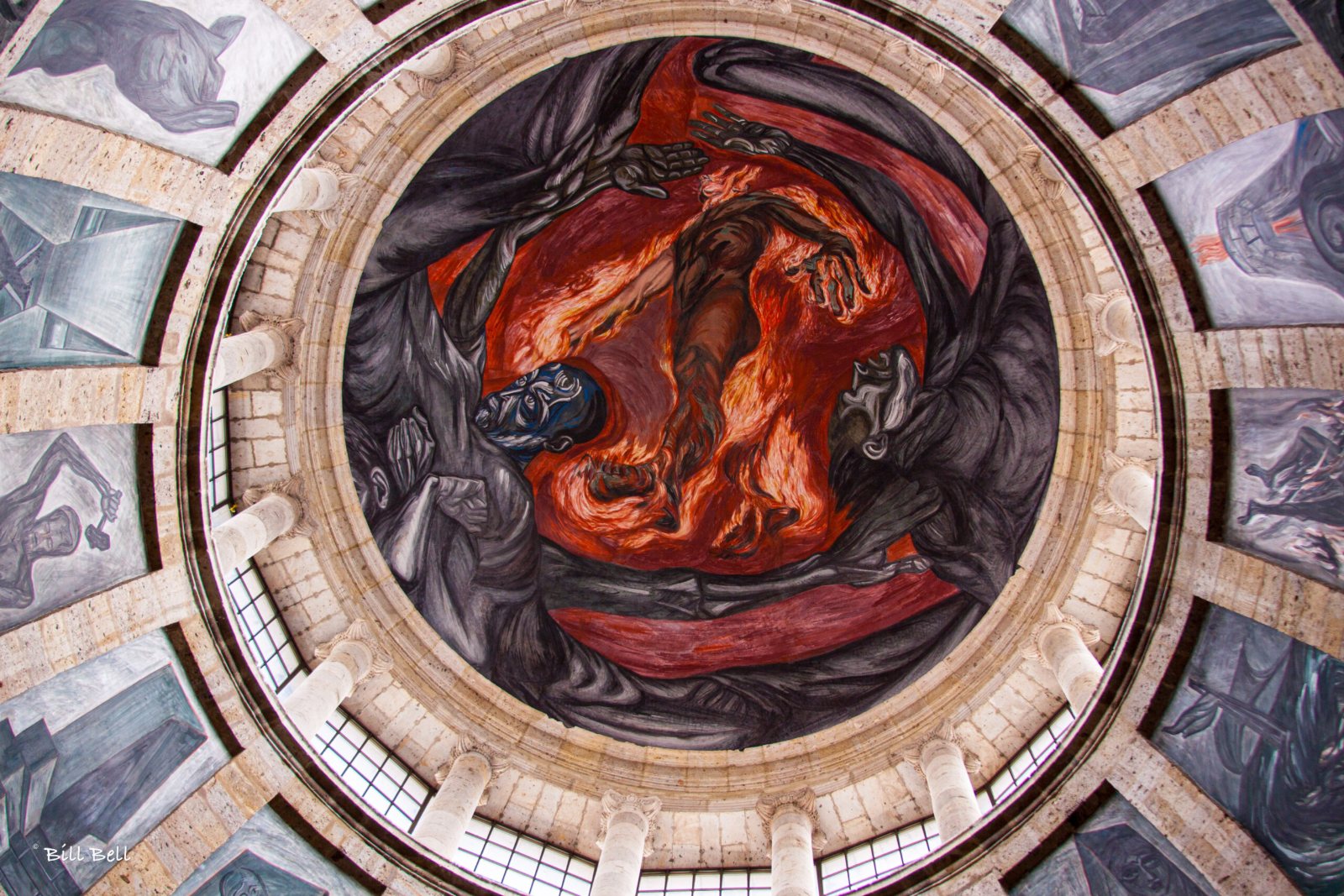
    And above it all is El Hombre de Fuego—The Man of Fire.

    The figure stretches through a blaze of orange and red, surrounded by darker bodies that follow the curve of the dome. It is difficult to find a resting place for your eyes. Everything seems to turn, reach or pull you farther into the painting.

    Whether you see suffering, transformation or some struggle between the two, the image stays with you. I would hesitate to reduce it to a tidy explanation. Part of its power is that you can keep looking and still have questions.

    For a photographer, the challenge is deciding how much to include.

    A wide photograph shows how the painting belongs to the building: the circle of stone, the windows, the figures gathered around the dome. Move closer with the lens and the experience changes. A face or a hand becomes the centre of attention. The great sweep of the mural gives way to a small, deeply human detail.

    A figure holding a hammer above sculpted faces in an Orozco fresco
    A quieter detail beneath the dome rewards patient looking. Photography by Bill Bell.

    These photographs move between those views. They show the scale, but also the expressions and gestures that make you want to look again.

    Still, a photograph can only take you so far. It cannot quite give you the sensation of standing below all that painted space, turning slowly and discovering that there is something demanding your attention in every direction.

    That is why I would give the Cabañas an unhurried part of a day. Spend time beneath the dome. Look at the surrounding paintings. Step into a courtyard and let your eyes rest, then return for another look.

    Close detail of flames and figures in El Hombre de Fuego
    Returning to the fire: a closer view of the dome’s restless colour and movement. Photography by Bill Bell.

    There is plenty in Guadalajara to keep a visitor happily occupied. But the Cabañas offers something that goes beyond an enjoyable afternoon. It leaves you thinking about Mexico, about its history, and about the extraordinary ability of an artist to make that history feel urgent and personal.

    Go for the murals. Give yourself time to feel them. You may find they accompany you long after you have left Guadalajara.


    More through Bill’s camera: Mexico in Motion: Our Love of Folklórico and We Always Stayed Longer at the Ruins.

    Planning your journey to Guadalajara? Visit our Mexico trip-planning guides and Mexico vehicle insurance information before you set out.

  • Sonora Investigating Reports of Illegal Highway Checkpoints

    Sonora Investigating Reports of Illegal Highway Checkpoints

    By Bill Bell · On the Road in Mexico · September 23, 2026

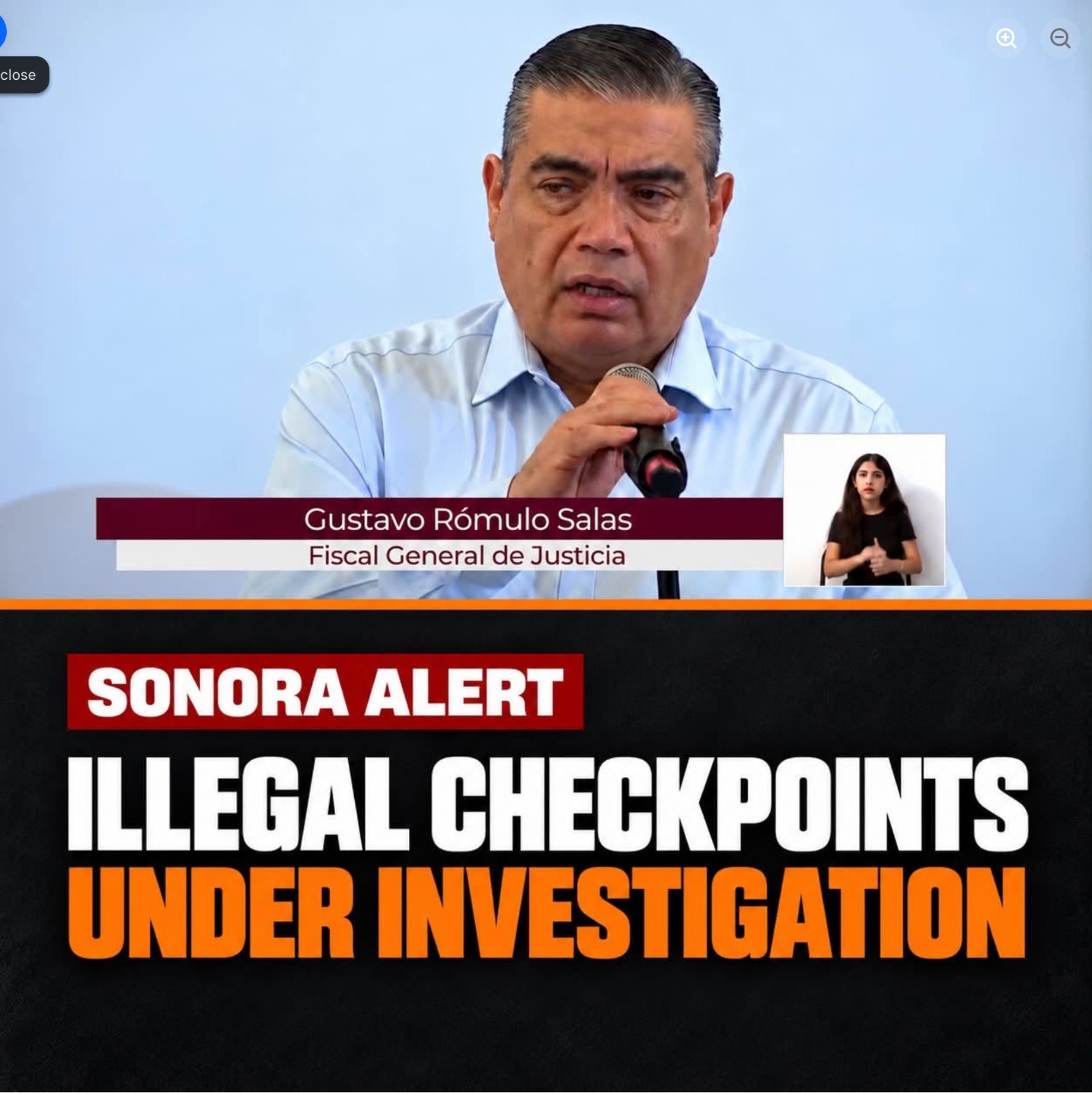
    News graphic reading Sonora Alert: Illegal Checkpoints Under Investigation, with a press-conference image captioned Gustavo Rómulo Salas.

    Some encouraging news for those of us who love travelling Mexico’s highways.

    Several Mexican news outlets reported on September 22 and 23 that Sonora authorities are investigating alleged illegal checkpoints and demands for money from travellers. The coverage includes Highway 15 and reports involving the Hermosillo and San Luis Río Colorado areas.

    According to N+, UnoTV and Infobae, Sonora’s prosecutor’s office is working with federal and state security agencies to locate these checkpoints and identify the people involved. Some complaints involve individuals claiming to be federal investigators. Whether they actually belong to the FGR remains something investigators need to establish.

    Authorities say legitimate checkpoints should have clearly identified personnel and official identification signs, including QR codes that allow travellers to verify information.

    Governor Alfonso Durazo also cautioned that videos circulating online are a mixture: some document real incidents, while others are older or come from elsewhere. That makes dates, locations and firsthand accounts particularly valuable.

    For our 88,000 members of On the Road in Mexico, this is welcome news. We recognise the need for legitimate security checks. Our concern is intimidation, missing belongings and demands for money—the very issues raised in our letter.

    The investigation was announced before our letter was sent, so I’m certainly not claiming credit. But it is encouraging to see these concerns being publicly acknowledged.

    An investigation is a beginning. These reports do not yet confirm arrests or that the problem has been resolved. We’ll be looking for concrete results that make highway travel more comfortable for everyone—Mexican residents and visitors alike.

    Bill Bell
    On the Road in Mexico

    News sources

  • Puerto Peñasco: The Beach Town Al Capone (Maybe) Built

    Puerto Peñasco: The Beach Town Al Capone (Maybe) Built

    Rocky Point sits at the north end of the Sea of Cortez, where the Sonoran Desert runs straight into the water – and depending who you ask, it’s either a quiet fishing town, a spring-break institution, or Arizona’s unofficial beach. All three are true at once.

    A Legend Built on Bootlegging

    Local legend has it that Al Capone built a casino, a water well, an airport, and a dock in Puerto Peñasco in the 1920s to help run his bootlegging operations across the border. It’s one of those stories that’s been repeated so often around town it’s practically civic history – except nobody has ever produced the paperwork to prove Capone was ever actually there. True or not, it fits: Prohibition-era America needed somewhere close, and Puerto Peñasco was about as close as it got.

    RV parked on the beach at Puerto Peñasco, photographed by Bill Bell

    From Fishing Camp to Arizona’s Beach

    Whatever kicked it off, the infrastructure boom that followed – roads, an airstrip, a working port – is what turned a fishing camp into a real town. Puerto Peñasco has been drawing Americans across the border ever since, helped along by a detail every Arizona teenager eventually learns: Mexico’s drinking age is 18, not 21. For decades that’s made it a favorite weekend and spring-break escape for visitors from Tucson and Phoenix, who are actually closer to this stretch of Mexican coast than they are to Hermosillo or Mexicali, the nearest Mexican cities in the other direction.

    The Point That Gave It Its Name

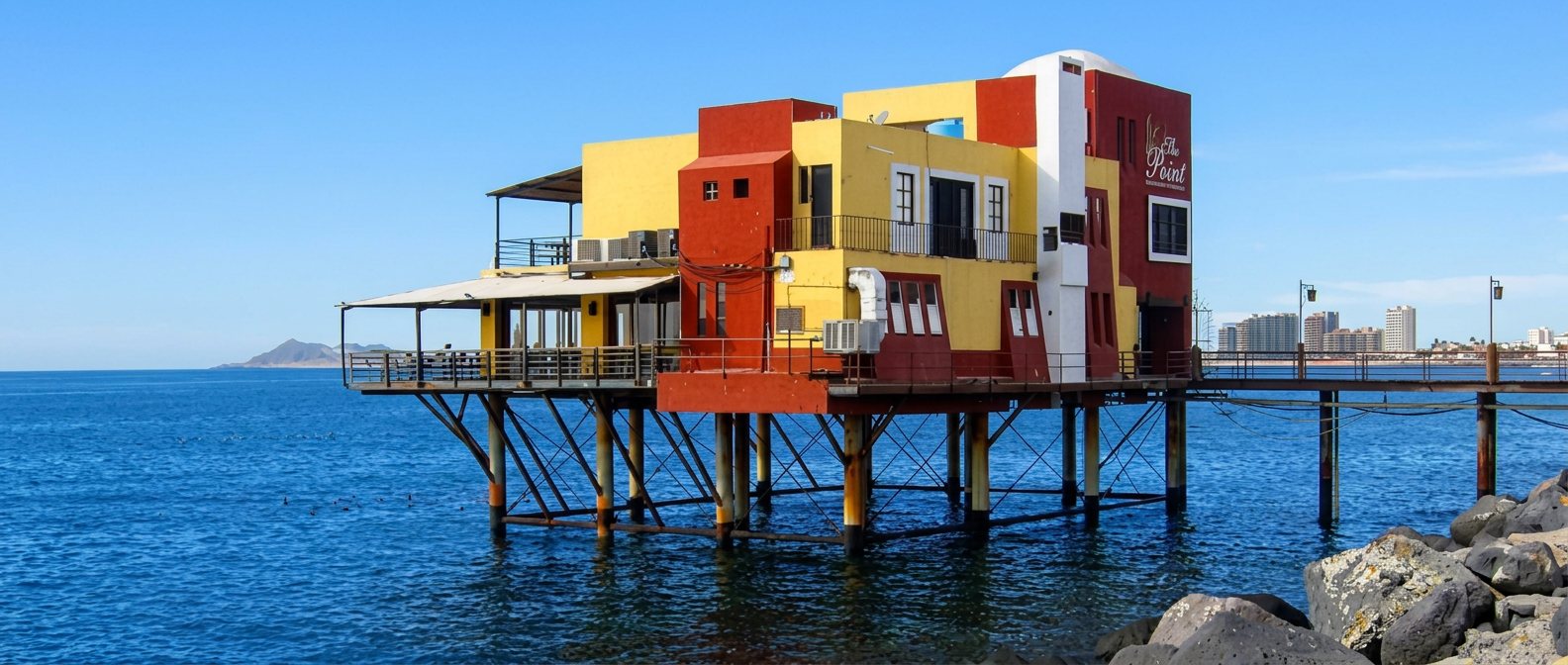
    Peñasco means “big rock” in Spanish, and the rocky point the town is built around is exactly that – a headland jutting into the Sea of Cortez that gave the place both its Mexican name and its English nickname, Rocky Point. Walk out to it and you get the whole town in one view: the malecón, the fishing fleet, and well over a hundred kilometers of beach running off in both directions.

    The rocky point and pier at Puerto Peñasco, photographed by Bill Bell

    The Video

    Photography by Bill Bell. Produced by Dorothy Bell.

    Planning to drive down yourself? We’ve laid out the logistics – the border crossing, what permit you actually need for a Sonora-only trip (and the one you don’t), and where to stay – over on our sister site: Visiting Puerto Peñasco: The Logistics.

    Bootlegger’s legend aside, is it the beach, the history, or the drinking age that keeps pulling people back to Rocky Point?

  • Palenque: The Jungle City of the King Who Ruled 68 Years

    Palenque: The Jungle City of the King Who Ruled 68 Years

    Most Maya sites make you imagine the jungle that used to surround them. At Palenque, you don’t have to imagine it – it’s still there, closing in right at the edge of the plazas, with the calls of howler monkeys carrying over the ruins most mornings.

    A King Crowned at Twelve

    Palenque’s story is really the story of one man: K’inich Janaab’ Pakal, who took the throne at age twelve after the city had been badly beaten down by its rival Calakmul, and then ruled for 68 years. Nearly everything visitors see today – the Palace, the temples, the astronomical alignments built into the architecture – dates from his reign or his son’s. He didn’t just rebuild a defeated city. He turned it into one that, by the accounts left behind, eclipsed even Tikal.

    What Was Found Inside the Temple of Inscriptions

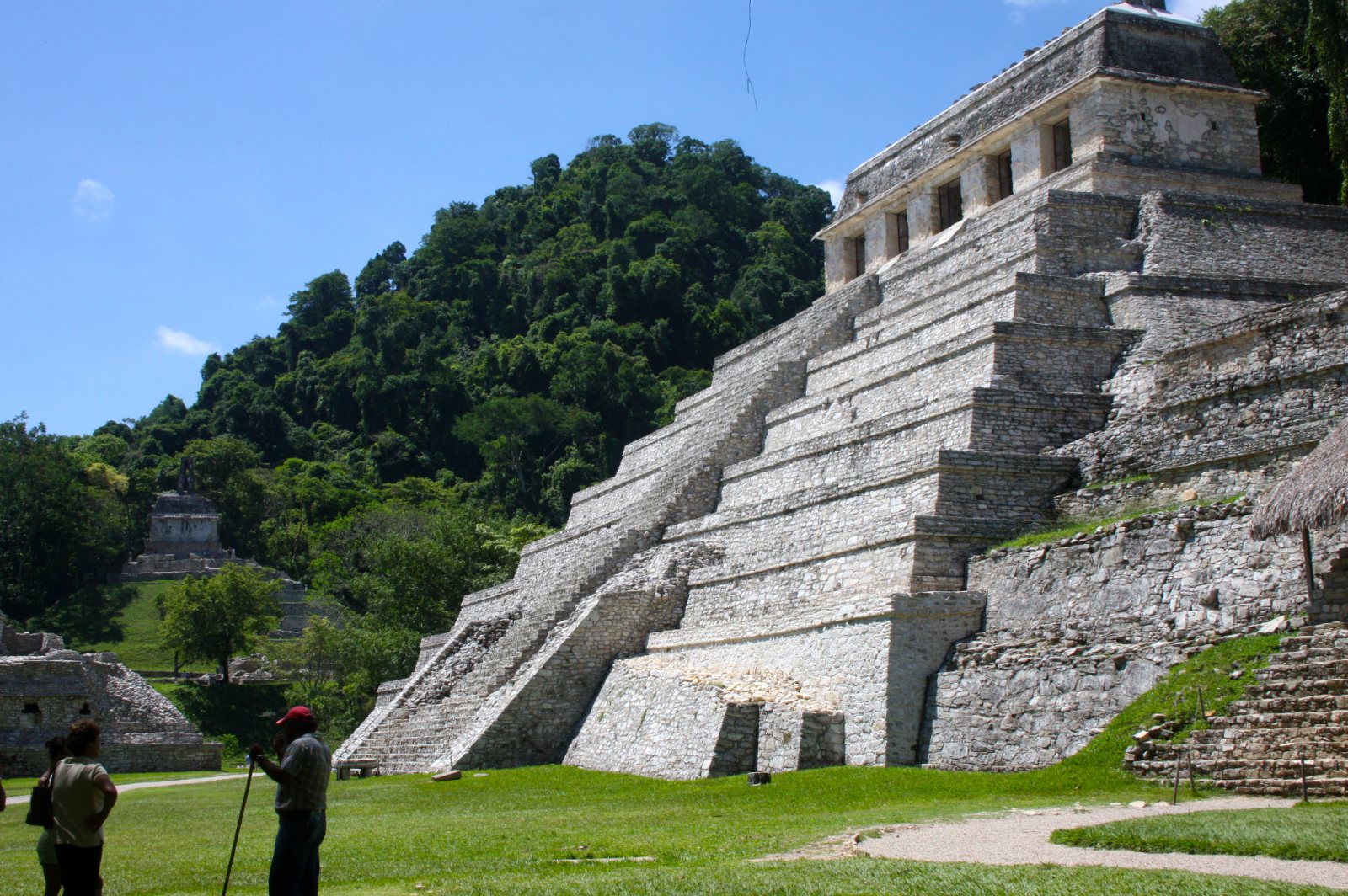
    Pakal’s funerary temple is the site’s centerpiece, and for a good reason: in 1952, archaeologist Alberto Ruz Lhuillier climbed down a hidden staircase sealed for over a thousand years and found Pakal’s tomb waiting exactly as it had been left – jade mask, jade jewelry, and a carved sarcophagus lid whose imagery has been endlessly (and wrongly, per mainstream archaeology) reinterpreted online as depicting an astronaut. It isn’t. It’s a king falling into the underworld to be reborn, straight out of Maya cosmology. It’s still one of the richest royal burials ever found anywhere in the Americas.

    Why It Went Quiet

    By around 799 AD, Palenque was abandoned, part of the broader collapse that hit Maya cities across the region. The jungle did the rest, swallowing the site so completely that Spanish explorers who stumbled onto it in the 1520s barely registered what they’d found. Serious excavation didn’t start until 1773, and the tomb itself sat undiscovered for another 180 years after that.

    The Video

    Photography by Bill Bell. Produced by Dorothy Bell.

    Planning to drive there yourself? We’ve laid out the logistics – the drive in, hours and admission, and the Highway 199 safety note – over on our sister site: Visiting Palenque: The Logistics.

    Between the setting and the history, Palenque tends to hit people differently than the more open sites like Chichén Itzá or Uxmal. What was your reaction the first time you stood in front of it?

  • Uxmal: The Maya City the Dwarf King Built in a Single Night

    The tallest thing at Uxmal isn’t shaped like any other pyramid in the Yucatán. Instead of straight sides and square corners, the Pyramid of the Magician rises out of an oval base, steep and rounded, like something poured rather than built. The Maya who lived here clearly meant it to stand apart, and centuries later, it still does.

    Five Temples, One Pyramid

    What you’re looking at isn’t one building — it’s five. The Maya practice of superimposition means each generation built a new temple over the last rather than tearing anything down, and archaeologists have traced five distinct construction phases packed inside this single structure. The oldest, at the base, dates to the 6th century and carries the hook-nosed masks of Chaac, the rain god, in the blocky Chenes style. The newest, capping the whole thing, went up around the 9th century in the more refined Puuc style Uxmal is famous for. Four hundred years of building, one pyramid.

    The Legend

    Ask locally how it got built, and you won’t hear about labor gangs or centuries of construction — you’ll hear about a dwarf. The story goes that a witch hatched him from an egg, and when the ruling king challenged him to build a pyramid overnight or be put to death, he did exactly that, and became king himself by morning. It’s a folk tale, not a historical record, but it’s told for a reason: nothing about this building looks like it happened at a normal, human pace. The five-temples-in-one truth is almost stranger than the myth.

    A City, Not Just a Pyramid

    Uxmal held something like 25,000 people at its peak between 600 and 1000 AD, and the Pyramid of the Magician is only the introduction. The Governor’s Palace and the Nunnery Quadrangle — a name the Spanish gave it, not the Maya — carry some of the finest stone mosaic work anywhere in the Maya world, latticework and geometric patterning cut directly into the facades rather than painted on. UNESCO named the whole site a World Heritage location in 1996, and it earns it.

    The Video

    Photography by Bill Bell. Produced by Dorothy Bell.

    Planning to drive there yourself? We’ve laid out the logistics — the drive from Mérida, hours, admission, what to know before you go — over on our sister site: Visiting Uxmal: The Logistics.

    If you’ve climbed the Puuc route and stood in front of this one, what struck you — the scale, or the strangeness of the shape?

  • Driving an RV in Guanajuato: The Tunnel That Took Our Awning

    Driving an RV in Guanajuato produced one of those Mexico road stories we have never forgotten. A wrong turn sent our 28-foot Class C motorhome into the city’s underground streets, where a narrow tunnel collected a souvenir from the side of our rig: the awning.

    We were staying at an RV park outside Guanajuato and decided to drive into the city. This was back in the days of paper maps. There was no friendly voice from a phone warning us that we had missed a turn or offering to recalculate the route.

    Through happenstance—and probably one unfortunate turn—we found ourselves travelling down a one-way road leading directly into one of Guanajuato’s tunnels.

    There was no retorno and nowhere to turn around. Once we entered, we were committed.

    Read the complete story, see Bill Bell’s photographs and find practical advice for RV drivers on On the Road in Mexico.

  • Mexico News Briefs: Trade Talks, Lake Chapala Advisory, Border Roads and More

    Mexico News Briefs — September 13, 2026

    A quick look at five stories worth following this week, with links to the original reports and official sources.

    Mexico and U.S. Push for Trade Deal Before November Elections

    Mexico and the United States are accelerating talks aimed at reaching a bilateral trade agreement before the U.S. midterm elections on November 3. Reuters reports that officials on both sides see advantages in reaching a deal quickly, including possible relief from U.S. tariffs and clearer rules around automotive content and Chinese investment in Mexico.

    The talks could have major implications for cross-border commerce, manufacturing and the auto industry, all of which are closely tied to the flow of goods through Mexico’s northern border crossings. Read the original Reuters report.

    Canada Removes Lake Chapala and Mazamitla Regional Warning

    The Government of Canada updated its Mexico travel advisory on September 11 and removed the regional warning that had applied to Mazamitla and the area around Lake Chapala. Canada continues to advise travellers to exercise a high degree of caution in Mexico overall, and avoid-non-essential-travel advisories remain in effect for a number of regions.

    For Canadians driving south for the winter, particularly those heading to Lake Chapala and Ajijic, it is a useful change to note. Travellers should still check the latest government advisory before departure because regional guidance can change quickly. Read the current Government of Canada advisory.

    Nuevo Laredo Completes Long-Delayed MEX II Corridor

    Nuevo Laredo has completed the MEX II Corridor and vehicular bridge project, a major piece of road infrastructure that had remained unfinished for more than 25 years. The bypass connects industrial areas with the World Trade Bridge and carries heavy commercial traffic, with more than 16,000 trucks using the corridor each day.

    Although the project is aimed largely at freight movement, any improvement that separates or moves commercial traffic more efficiently can also matter to travellers using the Nuevo Laredo border region. Read the original Laredo Morning Times report.

    Ángeles Verdes Assist More Than 125,000 Summer Travellers

    Mexico’s Ángeles Verdes provided 42,977 services and assisted 125,095 travellers during the summer vacation period from June 29 through August 30, according to Mexico’s Tourism Secretariat. Mechanical assistance accounted for nearly two-thirds of all calls, with tire, engine, cooling-system and electrical problems among the most common issues.

    For anyone driving through Mexico, it is another reminder of how valuable the Green Angels remain. Assistance is available on major routes, and travellers can request help through the 078 line and the Ángeles Verdes mobile app. Read the official Secretaría de Turismo report.

    Nearly 10,000 Visitors Already at Two New Yucatán Archaeology Museums

    Two archaeological museums opened in Yucatán in July have already welcomed almost 10,000 visitors. INAH reports that the Museo de Sitio Ichkaantijoo, at Dzibilchaltún, received 8,321 visitors through September 6, while the Museo Arqueológico del Puuc at Kabah received 1,676.

    The Puuc museum is the first dedicated specifically to the history and archaeology of the Puuc region, which includes Uxmal, Kabah, Sayil, Labná and Xlapak. For road travellers exploring Yucatán, both museums add worthwhile stops to an already remarkable archaeological route. Read the original INAH bulletin.

    Drive Mexico Magazine will continue to follow border, highway, travel-advisory and tourism developments affecting people travelling Mexico by road.

  • Long Drive South: Practical Advice for Driving Mexico

    Long Drive South: Practical Advice for Driving Mexico

    Long Drive South: Practical Advice for Driving Mexico

    After decades of logging miles across Mexico—publishing road reports, running On the Road in Mexico, and advising thousands of travelers on vehicle permits and Mexican auto insurance—one question lands in my inbox more than any other: “Is it actually safe to drive?”

    I enjoy the drive south, but experience is no substitute for checking the route ahead. We could not verify the winter-driver and vehicle-permit totals previously quoted here, so those estimates have been removed.

    What the numbers can—and cannot—tell us

    The U.S. State Department’s reporting on non-natural deaths abroad concerns U.S. citizens, not a defined sample of tourists driving Mexican highways. It lists dates, places and causes of death. Those records alone do not give us a tourist driving risk rate.

    Dividing deaths by visitor arrivals and comparing the result with a full-year U.S. resident homicide rate mixes different populations and time at risk. It does not establish that a road traveller is “ten times safer” in Mexico. We also could not substantiate the earlier border-city percentage or the claimed toll-road casualty rate.

    Vehicle theft: do not assume your rig is exempt

    Canada’s Mexico advisory names camper vans, SUVs and pickups as carjacking targets. It does not provide separate figures for motorhomes, fifth-wheels or travel trailers. We have not verified a specific motorhome or fifth-wheel carjacking report in this review, and the advisory should not be read as evidence that all RV types are commonly targeted. The absence of a verified report also does not establish zero risk. Read the current Canadian safety advice.

    The previous comparison table mixed U.S. city incident totals with unsupported descriptions of Mexican highway risk. It did not use matching years, definitions or exposure measures, so it has been removed.

    Check the whole route

    Check current state and regional advisories before choosing each day’s drive. As reviewed September 18, 2026, Canada advises avoiding non-essential travel in Sinaloa, with specified destination exceptions that require arrival by air or sea. Those exceptions do not authorize a drive through the state on Highway 15D. Read the regional warnings and exceptions.

    Road conditions and security conditions are separate questions. An open highway is not an assurance of safe travel. Our current road reports provide dated updates; check again before departure.

    Practical habits for the drive

    • Plan daylight driving. Choose an overnight stop early enough to allow for delays.
    • Use toll routes where appropriate. They do not remove security risks or override regional warnings. Check conditions on your chosen road.
    • Arrange insurance before departure. Confirm Mexican liability coverage, deductibles, assistance and claims procedures with your insurer. Our insurance guide explains the options.
    • If threatened, do not resist. People matter more than the vehicle or its contents.

    These precautions reflect Canada’s Mexico travel advice. They reduce avoidable exposure; they cannot promise a trouble-free trip.

    Mexico has given us decades of memorable road journeys. My advice is to prepare carefully, leave room to change plans and judge the next stretch on current information.

    Correction, September 18, 2026: Unverified travel totals, numerical risk comparisons and vehicle-targeting assurances have been removed. This article is practical guidance, not a statistical estimate of your personal risk.

  • Driving from Canada to Mexico? Start with These Three Decisions

    Driving from Canada to Mexico? Start with These Three Decisions

    By Bill Bell

    A drive from Canada to Mexico becomes easier to plan when you stop treating it as one enormous trip. There is the journey out of Canada, the U.S. transit, and the Mexican route that takes you to the place you actually want to be.

    Dorothy and I have spent decades travelling Mexico by car and RV. My advice is to settle a few practical decisions before getting lost in the details. We have put that approach into a new, short Driving to Mexico from Canada guide on On the Road in Mexico.

    1. Decide what the U.S. leg is for

    Is it part of your holiday, or simply the country you need to cross? If current U.S. politics make you uncomfortable spending money there, plan for necessary fuel, meals and overnight stops and leave optional shopping and sightseeing out. Keep enough flexibility to rest. Saving a hotel night is no bargain if it means driving tired.

    2. Get the border folder organized

    People, vehicles and insurance each have their own requirements. Put your passports, registration and supporting documents together. Work out whether your complete Mexican route requires a Temporary Import Permit, and arrange Mexico-valid vehicle insurance before crossing.

    See our updated Mexican auto insurance guide and compare coverage options before you leave home.

    We may receive a commission if you purchase through our insurance links, at no additional cost to you.

    The new guide has a short checklist with boxes you can tick, plus links to our existing documents, immigration, TIP and insurance guides. Confirm the current requirements for your citizenship, residency and vehicle before departure.

    3. Plan the first Mexican overnight stop

    Work backwards from your destination. Compare the road beyond each crossing, not just the distance to the border. Allow time for paperwork and aim for a first overnight stop you can reach comfortably in daylight.

    I also like a backup stop earlier along the route. Weather, a border queue or road construction can change the day. A workable plan has room for that.

    Short pages you can use on the road

    The new section separates the overview, U.S. transit, border checklist, and routes and overnight stops. It uses my road-trip photographs and keeps detailed reference material a click away.

    Open Driving to Mexico from Canada →

    Get the essentials organized, leave a little breathing room, and save some energy to enjoy Mexico when you arrive.